Connect with us

News

NiMet Predicts Three Days of Sunshine, Hazy Conditions

Published

on

By Onyeanya Immaculata

The Nigerian Meteorological Agency (NiMet) has forecast three days of sunshine and hazy conditions across the country from Sunday to Tuesday, urging residents to take necessary precautions.

In its weather outlook released on Saturday in Abuja, NiMet predicted predominantly sunny skies in the northern region, with hazy atmospheric conditions expected over the North-Central states throughout the period.

The agency said parts of Rivers, Bayelsa and Delta states may experience localised morning thunderstorms with light rainfall on Sunday, while isolated thunderstorms are expected later in the day across Rivers, Delta, Cross River, Akwa Ibom and Bayelsa states.

For Monday, NiMet anticipates continued sunshine in the North and hazy conditions in the North-Central region, while southern states are expected to be cloudy in the morning, followed by isolated thunderstorms later in the day.

On Tuesday, sunny and hazy conditions are expected to persist in the North and North-Central areas, while the South may record cloudy skies in the morning with isolated thunderstorms and moderate rainfall later in the day.

NiMet advised residents, particularly those with respiratory conditions, to take precautionary measures due to suspended dust particles, and urged motorists to exercise caution during rainfall.

Airline operators were also advised to obtain airport-specific weather reports for effective flight planning, while the public was encouraged to stay updated through NiMet’s official weather channels.

Continue Reading
Click to comment

Leave a Reply

Your email address will not be published. Required fields are marked *

News

Outrage As Foreign Tourist Accuses Daura Emir Of Sexual Assault Inside Palace

Published

on

Patrick Idowu


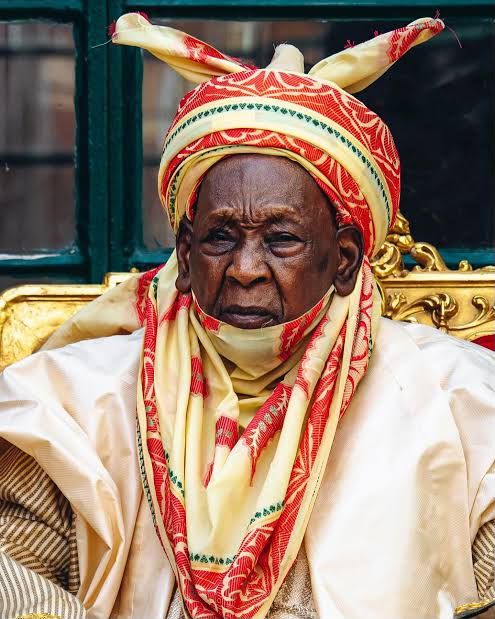
The Emir of Daura in Katsina State, His Royal Highness, Alhaji Faruq Umar-Faruk, has come under intense public scrutiny following allegations of sexual assault by a foreign tourist who claimed the traditional ruler touched her inappropriately during a visit to his palace.


The allegation, which has sparked widespread outrage on social media, emerged after the tourist, who identifies herself on Instagram as @beduinqa, released a video purportedly showing her encounter with the 92-year-old monarch.


The incident has attracted condemnation and calls for an independent investigation, with Amnesty International Nigeria and prominent northern voices reportedly demanding that the allegation be thoroughly investigated.


In the footage, the Emir is seen smiling and holding the woman’s hand during their conversation. At one point, the tourist is heard objecting to his physical contact, telling him: “No, no, you can’t be touching me.”


The tourist subsequently took to Instagram to narrate what she described as a disturbing experience at the palace during her 30-day tour of Nigeria.


According to her, the encounter happened on November 14, when she was received at the palace and taken into an elegantly furnished room where they sat together and exchanged pleasantries.


She alleged that what began as a friendly conversation took an uncomfortable turn when the monarch allegedly started fondling her hand before touching other parts of her body.


She further claimed that the Emir hugged and kissed her on the cheek before allegedly touching her breasts, despite her repeated objections.


Describing the experience as disgusting and shocking, she said she never imagined that such an incident would happen inside a royal palace.


“I wasn’t sexually assaulted at any moment when walking through the streets of Nigeria, even in busy crowded places, but to my shock, I was assaulted in a palace by a traditional leader who should be behaving in an exemplary and dignified way,” she wrote.


The tourist explained that although the incident occurred on November 14, she deliberately delayed making it public until she had completed her Nigerian tour and left the country.


She also suggested that she might not have been the first female visitor to experience similar treatment from the monarch, alleging that she had recorded the encounter using Meta smart glasses.


“I suspect I wasn’t the first woman he assaulted but probably the first one with proof recorded,” she added.


The controversy has intensified following the emergence of the video, which captures portions of the interaction between the Emir and the tourist, including their discussion about her travel plans, Nigerian food and the history of Daura.


During the conversation, the woman informed the monarch that her Nigerian visa was about to expire, explaining that she would be leaving the country on Monday or Tuesday.


When asked whether she would return to Daura, she indicated that she might visit again for the traditional Durbar festival.


She also praised the food served at the palace and expressed interest in learning about Daura’s history, particularly its account as a kingdom once ruled by a woman.


However, the atmosphere appeared to change when the Emir allegedly touched her, prompting her immediate objection.


Emirate acknowledges viral video


Reacting to the controversy, the Daura Emirate Council spokesperson, Ibrahim Murtala, popularly known as Sarkin Labarai, confirmed that the palace had seen the viral footage.


He said the Emirate was currently examining its contents and would make an official response after completing the necessary processes.


Meanwhile, the Katsina State Government had yet to issue an official statement on the allegation as of the time of filing this report.


Efforts to obtain comments from the Commissioner for Local Government and Chieftaincy Affairs, Alhaji Bashir Tanimu, were unsuccessful, as calls to his telephone went unanswered. He also did not respond to a text message sent to him.


The Katsina State Police Command equally said it was unaware of the video and had not received any formal complaint concerning the incident.


The Police Public Relations Officer, Abubakar Sadiq Aliyu, said the command had no official information on the matter.


Who is the foreign tourist?


A review of the woman’s Instagram account shows that she uses the name Mirka C. and the username @beduinqa.


Her profile indicates that she has visited 185 of the world’s 197 countries, documenting extensive travels across Africa, the Middle East, Asia and other regions.


Her travel records include destinations considered difficult to access, such as Yemen, Chad, Comoros and remote islands.


Her posts also feature humanitarian activities, scuba diving and expeditions to less-explored destinations.


On Couchsurfing, a travel community platform, she reportedly indicated that she sometimes uses the name Amira when visiting Arabic-speaking countries, reflecting her interest in interacting with local communities.


Her social media activities suggest a Polish connection, although her nationality has not been independently established.


The allegation has continued to generate heated debate, particularly over the conduct expected of traditional rulers and the responsibility of public institutions to investigate claims of sexual misconduct.


For now, the Emirate’s promised response, alongside possible action by the state government and police, is being closely awaited

Continue Reading

Business

Abuja Entrepreneurs Battle Rising Costs, Weak Consumer Spending

Published

on

By Ifunanya Stephanie

Entrepreneurs in Abuja say rising operating costs, weaker consumer spending and irregular cash flow are putting increasing pressure on their businesses, with some struggling to remain profitable despite years of investment and hard work.

From bakers contending with expensive ingredients and unreliable electricity to fabric sellers battling unpaid credit purchases and fashion designers waiting months for payments, business owners across different sectors say the current economic climate is making it increasingly difficult to sustain their enterprises.

They said the pressure has reduced profit margins, disrupted daily operations and, in some cases, pushed them to consider shutting down businesses they had spent years building.

Aisha Dikko, a baker and food vendor, said her journey into entrepreneurship had been shaped by sacrifices and challenges she did not anticipate when she started.

Inspired by her mother, who was also a baker, Dikko said what began as a passion gradually developed into a business. However, she admitted that she initially underestimated what it would take to turn her baking skills into a sustainable enterprise.

“I thought it would be relatively easy. People loved my cakes and small chops whenever I made them at home, so I assumed turning that into a business would be straightforward,” she said.

She explained that running the business required more than baking skills, as she had to learn pricing, marketing, customer relations, production and financial management.

Although the business has recorded some growth, Dikko said fluctuating prices of ingredients and supplies had remained a major challenge, with restocking costs changing frequently.

She said customers’ declining purchasing power had compounded the problem, as some prospective buyers made offers that fell far below the actual cost of production.

Dikko recalled an instance in which a customer offered ₦70,000 for desserts for 300 guests, despite her estimated cost of providing desserts for just 100 guests being about ₦300,000.

Electricity, she added, had also become one of her biggest operational challenges, at a point making her consider abandoning the business.

She said the installation of solar power by her husband provided some relief, allowing her to continue operating from home, although she still relies on gas and an inverter for some activities.

Dikko called for more practical government support for small businesses, arguing that access to loans alone would not resolve the difficulties confronting entrepreneurs.

For Aisha Kabir, a fabric seller with more than a decade of experience, the struggle is largely about maintaining cash flow, particularly as more customers find it difficult to pay for goods purchased on credit.

Kabir said credit sales had made it increasingly difficult to maintain a steady flow of money into the business.

She explained that there were months when customers continued to collect goods but little or no money came in because of outstanding payments, leaving her unable to meet financial obligations or restock adequately.

Rising purchase and transportation costs have also affected patronage, she said, as higher operating expenses eventually force sellers to increase prices.

“This automatically cuts off some potential buyers,” she said.


Kabir called for interest-free financial assistance with less cumbersome requirements to help small business owners sustain and expand their enterprises.

Aliyu Halliru, a tailor and fabric seller who specialises in men’s clothing, said his nine-year journey in business had involved considerable determination but was now being tested by mounting expenses.

Halliru said he started with virtually nothing but had a clear ambition to build a recognisable brand that customers could trust.


He identified the rising cost of goods, transportation, electricity and other operational expenses as major challenges, explaining that they had reduced his profit margins and made it difficult to keep prices affordable without compromising quality.

The financial pressure, he said, had sometimes become overwhelming, prompting thoughts of shutting down the business.

However, support from his parents, who provided capital, and friends, who patronised his services, helped keep the enterprise afloat.

“The trust our customers have in the brand, their support and positive feedback also mean a lot to me,” he said, adding that his original vision continued to motivate him despite the difficulties.

For Halliru, the progress recorded over the years remains a reminder of his investment in the business and the possibilities he hopes to achieve.

Similarly, Fatima Ata, a fashion designer who has spent about five years in the industry, said delayed payments from customers had become a major obstacle to the growth of her business.

Ata, who developed an interest in fashion design as a child, said she ventured into the trade after completing her training, hoping to turn her passion and skills into a sustainable source of income.

She said collecting payments, particularly from friends and family members, had become a recurring challenge because enforcing strict payment terms was often difficult when personal relationships were involved.

“Unfortunately, these delays have affected my cash flow, and I am still struggling to recover financially from some of the outstanding payments,” she said.

Ata added that higher prices of fabrics, transportation, electricity and other necessities had forced her to increase service charges, sometimes causing her to lose customers who could no longer afford her services.

Despite the difficulties, she said she had not considered closing the business because fashion design remained her primary source of livelihood.

She hopes to build a globally recognised fashion brand, drawing inspiration from established Nigerian and international labels.

Ata called for improved infrastructure, reliable electricity, grants and affordable loans, saying entrepreneurs should not have to bear the additional cost of providing basic amenities needed to operate their businesses.

The experiences of the four entrepreneurs reflect a broader challenge confronting businesses in Abuja, where rising operating expenses and constrained household spending are affecting sales, cash flow and profit margins.

A Nigerian Economic Summit Group business survey for October 2026 also reported slower business expansion, with its Current Business Performance Index falling to 115.4 points from 117.8 points in September. The group identified weak demand conditions, electricity supply problems, high operating costs and limited access to finance among the constraints facing businesses.

While the challenges vary across sectors, the entrepreneurs described similar survival strategies, including adjusting prices, cutting expenses, extending credit, relying on family support and operating from home.

For some, the possibility of shutting down has become difficult to ignore. For others, the passion that inspired them to start, the support of loved ones and the hope of building something lasting remain reasons to keep going.

Continue Reading

Agriculture

Nigeria to Repay $500m World Bank Agriculture Credit by 2050

Published

on

By Ifunanya Stephanie


The Federal Government will repay a $500m World Bank agricultural credit over 20 years, with principal repayments scheduled to begin in May 2031 and end in November 2050, under a financing agreement with the International Development Association (IDA).

The agreement provides for 40 semi-annual principal repayments of 2.5 per cent each, equivalent to $12.5m per instalment if the full credit is disbursed.

According to Schedule 3 of the agreement, Nigeria is required to make repayments on May 15 and November 15 every year, beginning May 15, 2031, and ending November 15, 2050.

This means repayment obligations will continue for more than 18 years after the agricultural project’s scheduled closing date of July 30, 2032.

The financing is for the Nigeria Sustainable Agricultural Value-Chains for Growth project, also known as AGROW, which aims to improve smallholder farmers’ productivity, strengthen agricultural value chains, expand market access and create jobs.

The World Bank approved the $500m IDA credit in March 2026 to support the project, which is expected to improve agricultural production and food and nutrition security across participating states.

The financing agreement, disclosed on the World Bank’s website on October 29, 2026, provides for the credit to be made available as concessional financing.

It also stipulates a maximum annual commitment charge of 0.5 per cent on the undisbursed balance, while the interest charge is determined using a reference rate and variable spread, subject to specified adjustments, ceilings and floors.

Under the agreement, $230m, representing 46 per cent of the financing, is allocated to performance-based matching grants for agribusiness investments.

Another $229.5m is earmarked for goods, works, consultancy services, operating costs and training, while $40.5m is reserved for expenditure linked to performance-based conditions.

The matching grants are expected to support investments in agricultural aggregation, storage, processing, logistics, post-harvest handling and market connections between farmers and buyers.

The project will also support agricultural research, improved seeds, extension services, digital farmer registration and artificial intelligence-powered weather forecasting.

Other interventions include strengthening seed certification, improving fertiliser quality regulation and promoting responsible land-based agricultural investments.

However, participating states must meet specific conditions before accessing the project financing.

Under Annex 2 of the agreement, states are required to adopt a responsible land investment framework through an executive order and establish regulations supporting a common digital farmer registry.

They must also publish a consolidated schedule of fees and levies imposed on the inter-state movement of goods, alongside reports detailing traders’ complaints and remedial actions.

Participating states are further required to publish policies linking support for agricultural cooperatives to verified commercial relationships with buyers.

The agreement provides that funds cannot be released to participating states until the Federal Government submits satisfactory evidence of compliance and executes the required subsidiary agreements.

The World Bank may also withhold, reallocate or cancel financing tied to performance targets that are not achieved.

Among the targets is the registration of farmers in a national digital registry, with basic and enhanced coverage targets of 40 per cent and 70 per cent respectively.

The agreement allocates $16m to this condition, with payments capped at $1m per participating state.

Other performance-linked allocations include $5m each for improved seed availability and private investment in seed production, $2.5m for fertiliser quality compliance and $12m for responsible land investments.

The Federal Government is also required to establish a national steering committee and a project coordination unit within three months of the project becoming effective.

The agreement further mandates independent verification of performance targets, compliance with environmental and social safeguards and periodic implementation reports.

For artificial intelligence applications, it requires risk assessments before deployment and prohibits uses involving mass surveillance, social scoring and discriminatory practices.

The financing agreement sets an effectiveness deadline of 90 days after October 29, 2026, subject to the fulfilment of the required implementation arrangements.

Meanwhile, figures published by the Debt Management Office show that Nigeria’s outstanding debt to the World Bank Group stood at $20.73bn as of June 30, 2026, comprising $19.12bn owed to the International Development Association and $1.61bn to the International Bank for Reconstruction and Development.

The figure represented an increase of approximately $1.34bn, or 6.93 per cent, from the $19.39bn recorded in June 2025.

Compared with March 2023, when Nigeria’s World Bank debt stood at $14.34bn, the June 2026 figure represented an increase of $6.39bn, or about 44.6 per cent.

The World Bank’s combined exposure accounted for approximately 38.02 per cent of Nigeria’s total external debt stock of $54.52bn as of June 2026, making it the country’s largest multilateral creditor.

The DMO also reported that Nigeria’s external debt increased from $43.16bn in June 2023 to $54.52bn in June 2026.

In naira terms, external debt rose from N33.25tn to N75.20tn over the period, an increase of N41.95tn, or approximately 126.17 per cent.

The figures reflect both additional external borrowing and the impact of exchange rate movements on the naira value of foreign-currency obligations.

L

External debt accounted for 45.09 per cent of Nigeria’s total public debt of N166.79tn as of June 30, 2026, while domestic debt represented the remaining 54.91 per cent.

The World Bank’s International Debt Report 2026 has also raised concerns about rising borrowing costs and debt-servicing obligations among developing economies.

The report said external debt across low- and middle-income countries rose by 5.5 per cent to a record $9.4tn in 2025, while warning that rising debt-service payments could reduce resources available for essential development investments.

“Low- and middle-income countries are borrowing more, paying more, and, in many cases, leaving less for long-term development,” the World Bank said.

It added that growing debt obligations were putting pressure on public resources needed for infrastructure, education, healthcare and employment.

Continue Reading

Trending

extrabetseo ajansıseo ajansıcasino siteleritrlisans pinterestgiftcardmall/mygiftgrandpashabet girişgrandpashabet güncel girişgrandpashabetgrandpashabet girişgrandpashabettaraftarium24dizipalgiftcardmall/mygiftjustin tvGrandpashabetGrandpashabetGrandpashabetcasino siteleriRadissonbetsweet bonanzacasino siteleripadişahbettaraftarium24taraftarium24rojadirectajustin tvcasinolevantjojobetjojobetjojobetcasibomholiganbet xcasinolevantcasinolevantjojobetjojobetholiganbetholiganbetholiganbetholiganbetjojobetgrandpashabetmatadorbetonwinsahabetgrandpashabetmarsbahis xmarsbahiscasinolevantcasinolevantcasinolevantgrandpashabetjojobetjojobetgrandpashabetsekabetmatbetimajbetcasibompusulabetvdcasinosuperbetincratosroyalbetcasibomholiganbetholiganbet girişholiganbetmarsbahiscasinolevantjojobetcasinolevantgrandpashabetgrandpashabetnesinecasino xwbahis xbetgaranti xgrandpashabet girişGrandpashabetjojobet