Connect with us

News

2Face Joins Alia’s Team

Published

on

By Njoku Chijioke

Benue State Governor, Hyacinth Alia, has appointed celebrated music icon Innocent Ujah Idibia, widely known as 2Face Idibia, as Technical Adviser on Entertainment and Community Outreach.

The appointment, announced Monday, positions 2Face to play a key role in promoting Benue’s rich cultural heritage while deepening community involvement across the state. With his global recognition and local roots, 2Face is expected to attract fresh visibility and investment to the entertainment scene in Benue.

The news has sparked excitement among fans and residents, many seeing it as a bold move to blend governance with popular culture.

Continue Reading
Click to comment

Leave a Reply

Your email address will not be published. Required fields are marked *

Agriculture

Nigeria to Repay $500m World Bank Agriculture Credit by 2050

Published

on

By Ifunanya Stephanie


The Federal Government will repay a $500m World Bank agricultural credit over 20 years, with principal repayments scheduled to begin in May 2031 and end in November 2050, under a financing agreement with the International Development Association (IDA).

The agreement provides for 40 semi-annual principal repayments of 2.5 per cent each, equivalent to $12.5m per instalment if the full credit is disbursed.

According to Schedule 3 of the agreement, Nigeria is required to make repayments on May 15 and November 15 every year, beginning May 15, 2031, and ending November 15, 2050.

This means repayment obligations will continue for more than 18 years after the agricultural project’s scheduled closing date of July 30, 2032.

The financing is for the Nigeria Sustainable Agricultural Value-Chains for Growth project, also known as AGROW, which aims to improve smallholder farmers’ productivity, strengthen agricultural value chains, expand market access and create jobs.

The World Bank approved the $500m IDA credit in March 2026 to support the project, which is expected to improve agricultural production and food and nutrition security across participating states.

The financing agreement, disclosed on the World Bank’s website on October 29, 2026, provides for the credit to be made available as concessional financing.

It also stipulates a maximum annual commitment charge of 0.5 per cent on the undisbursed balance, while the interest charge is determined using a reference rate and variable spread, subject to specified adjustments, ceilings and floors.

Under the agreement, $230m, representing 46 per cent of the financing, is allocated to performance-based matching grants for agribusiness investments.

Another $229.5m is earmarked for goods, works, consultancy services, operating costs and training, while $40.5m is reserved for expenditure linked to performance-based conditions.

The matching grants are expected to support investments in agricultural aggregation, storage, processing, logistics, post-harvest handling and market connections between farmers and buyers.

The project will also support agricultural research, improved seeds, extension services, digital farmer registration and artificial intelligence-powered weather forecasting.

Other interventions include strengthening seed certification, improving fertiliser quality regulation and promoting responsible land-based agricultural investments.

However, participating states must meet specific conditions before accessing the project financing.

Under Annex 2 of the agreement, states are required to adopt a responsible land investment framework through an executive order and establish regulations supporting a common digital farmer registry.

They must also publish a consolidated schedule of fees and levies imposed on the inter-state movement of goods, alongside reports detailing traders’ complaints and remedial actions.

Participating states are further required to publish policies linking support for agricultural cooperatives to verified commercial relationships with buyers.

The agreement provides that funds cannot be released to participating states until the Federal Government submits satisfactory evidence of compliance and executes the required subsidiary agreements.

The World Bank may also withhold, reallocate or cancel financing tied to performance targets that are not achieved.

Among the targets is the registration of farmers in a national digital registry, with basic and enhanced coverage targets of 40 per cent and 70 per cent respectively.

The agreement allocates $16m to this condition, with payments capped at $1m per participating state.

Other performance-linked allocations include $5m each for improved seed availability and private investment in seed production, $2.5m for fertiliser quality compliance and $12m for responsible land investments.

The Federal Government is also required to establish a national steering committee and a project coordination unit within three months of the project becoming effective.

The agreement further mandates independent verification of performance targets, compliance with environmental and social safeguards and periodic implementation reports.

For artificial intelligence applications, it requires risk assessments before deployment and prohibits uses involving mass surveillance, social scoring and discriminatory practices.

The financing agreement sets an effectiveness deadline of 90 days after October 29, 2026, subject to the fulfilment of the required implementation arrangements.

Meanwhile, figures published by the Debt Management Office show that Nigeria’s outstanding debt to the World Bank Group stood at $20.73bn as of June 30, 2026, comprising $19.12bn owed to the International Development Association and $1.61bn to the International Bank for Reconstruction and Development.

The figure represented an increase of approximately $1.34bn, or 6.93 per cent, from the $19.39bn recorded in June 2025.

Compared with March 2023, when Nigeria’s World Bank debt stood at $14.34bn, the June 2026 figure represented an increase of $6.39bn, or about 44.6 per cent.

The World Bank’s combined exposure accounted for approximately 38.02 per cent of Nigeria’s total external debt stock of $54.52bn as of June 2026, making it the country’s largest multilateral creditor.

The DMO also reported that Nigeria’s external debt increased from $43.16bn in June 2023 to $54.52bn in June 2026.

In naira terms, external debt rose from N33.25tn to N75.20tn over the period, an increase of N41.95tn, or approximately 126.17 per cent.

The figures reflect both additional external borrowing and the impact of exchange rate movements on the naira value of foreign-currency obligations.

L

External debt accounted for 45.09 per cent of Nigeria’s total public debt of N166.79tn as of June 30, 2026, while domestic debt represented the remaining 54.91 per cent.

The World Bank’s International Debt Report 2026 has also raised concerns about rising borrowing costs and debt-servicing obligations among developing economies.

The report said external debt across low- and middle-income countries rose by 5.5 per cent to a record $9.4tn in 2025, while warning that rising debt-service payments could reduce resources available for essential development investments.

“Low- and middle-income countries are borrowing more, paying more, and, in many cases, leaving less for long-term development,” the World Bank said.

It added that growing debt obligations were putting pressure on public resources needed for infrastructure, education, healthcare and employment.

Continue Reading

Business

Food Inflation Tops 20% in 19 States Despite National Slowdown

Published

on

By Ifunanya Stephanie

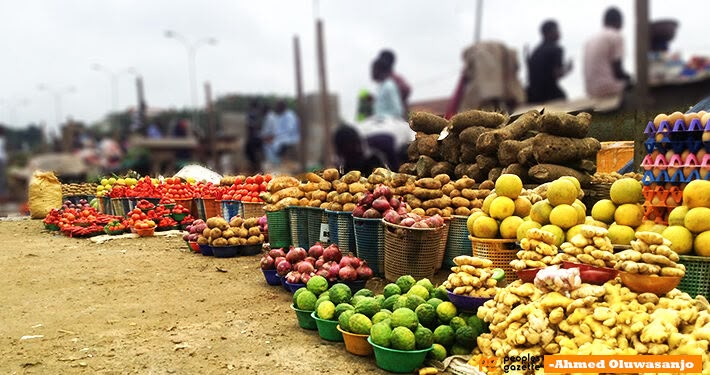
Food inflation exceeded 20 per cent in 19 Nigerian states in October 2026, despite a decline in the national annual rate, highlighting persistent price pressures across more than half of the country.

The affected states represent 52.8 per cent of Nigeria’s 36 states, according to an analysis of the latest Consumer Price Index data by The PUNCH.

The National Bureau of Statistics reported that national food inflation eased to 19.13 per cent in October from 19.59 per cent in September. However, the state-level figures showed that food price increases remained above 20 per cent in 19 states.

Ondo recorded the highest annual food inflation at 31.74 per cent, rising slightly from 31.49 per cent in September. Lagos followed at 31.43 per cent, although this represented a decline from 34.40 per cent, while Imo recorded 29.75 per cent, down from 33.79 per cent.

Oyo recorded 28.81 per cent, compared with 24.50 per cent in September, while Ebonyi’s rate rose from approximately 22 per cent to 27.96 per cent. Rivers recorded 25.33 per cent, compared with about 28 per cent previously.

Other states with annual food inflation above 20 per cent were Abia at 24.22 per cent, Delta at 23.91 per cent, Enugu at 23.48 per cent, Zamfara at 22.88 per cent, Ogun at 22.47 per cent, Yobe at 22.26 per cent, Anambra at 22.23 per cent and Kebbi at 22.21 per cent.

Akwa Ibom recorded 21.56 per cent, Edo 21.52 per cent, Sokoto 21.40 per cent, Ekiti 20.61 per cent and Kaduna 20.32 per cent.

The NBS confirmed that Ondo, Lagos and Imo recorded the highest year-on-year food inflation rates in October.

However, the monthly figures presented a different picture, showing that food prices declined nationally for the second consecutive month, although the pace of reduction slowed.

National food inflation stood at -0.75 per cent month-on-month in October, compared with -1.55 per cent in September. This represented an increase of 0.80 percentage points in the monthly inflation rate, indicating that average food prices were still falling but at a slower pace.

The NBS attributed the movement to changes in the prices of commodities including vegetable oil, sardines, green peas, frozen fish, locally produced rice, fresh catfish, beef tripe, palm oil and millet flour.

At the state level, Yobe recorded the highest monthly food inflation at 18.41 per cent in October, reversing a decline of 7.0 per cent in September. Kebbi followed with 16.45 per cent, compared with -4.9 per cent previously, while Sokoto recorded 13.0 per cent against -1.7 per cent.

Zamfara’s monthly rate rose to 8.7 per cent from 6.0 per cent, while Anambra recorded 4.3 per cent, compared with -0.3 per cent in September.

Enugu’s rate stood at 4.9 per cent, down from 14.5 per cent, while Abia rose to 2.6 per cent from 0.4 per cent. Ebonyi recorded 2.4 per cent against -2.1 per cent, Ogun 1.5 per cent against -0.4 per cent, and Edo 0.9 per cent compared with -2.8 per cent.

Imo and Ondo each recorded monthly food inflation of 0.6 per cent, although their rates moderated from 5.2 per cent and 2.6 per cent respectively. Kaduna, by contrast, recorded a monthly decline of 4.7 per cent, reversing the 3.2 per cent increase recorded in September.

Lagos recorded a 5.93 per cent monthly decline, compared with a 0.4 per cent increase in September. Rivers recorded -4.3 per cent against -2.0 per cent, while Delta posted -3.8 per cent compared with a 2.2 per cent increase.

Oyo recorded -2.6 per cent against 3.8 per cent, Akwa Ibom -1.5 per cent against -0.4 per cent, and Ekiti -0.4 per cent compared with -1.5 per cent previously.

Overall, 12 of the 19 states recorded positive monthly food inflation in October, while seven experienced declines, underscoring the uneven movement of food prices across the country.

The NBS cautioned against making direct comparisons between states without considering differences in consumption patterns and the weights assigned to individual food items in calculating their respective inflation rates.

Continue Reading

Abuja Reports

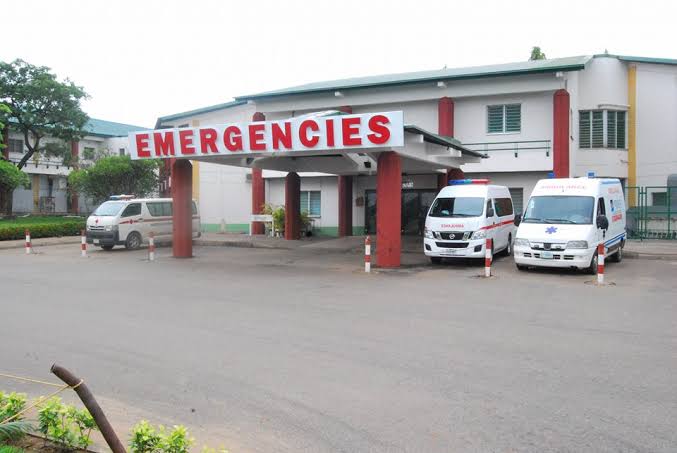
Two Reportedly Killed in Crash Near National Hospital, Abuja

Published

on

By Erica May


Two people have reportedly died and another sustained injuries in a road accident near the National Hospital in Abuja.

The crash, said to have occurred in the early hours of November 22, 2026, attracted the attention of emergency responders and other road users, with images and reports of the incident circulating on social media.

The identities of the reported victims and the condition of the injured survivor had not been established as of the time of filing this report.

The circumstances surrounding the crash, including the number and types of vehicles involved, also remained unclear.

There was no immediate official statement from the Federal Road Safety Corps, the police or other relevant emergency agencies confirming the reported casualties.

Further details are expected as authorities establish the circumstances of the accident.

Continue Reading

Trending

extrabetseo ajansıseo ajansıcasino siteleritrlisans pinterestgiftcardmall/mygiftgrandpashabet girişgrandpashabet güncel girişgrandpashabetgrandpashabet girişGrandpashabettaraftarium24dizipalgiftcardmall/mygiftjustin tvGrandpashabetGrandpashabetGrandpashabetDeneme Bonusu Veren SitelerCasibomcasino siteleriultrabettaraftarium24taraftarium24rojadirectajustin tvcasinolevantjojobetgrandpashabetcasinolevantgrandpashabetgrandpashabet girişgrandpashabetgrandpashabetgrandpashabetgrandpashabetmarsbahismarsbahismarsbahisholiganbetjojobetgrandpashabetmatadorbetonwinsahabetgrandpashabetgrandpashabetgrandpashabetgrandpashabetgrandpashabetgrandpashabetgrandpashabetgrandpashabetgrandpashabetholiganbetsekabetmatbetimajbetcasibompusulabetvdcasinosuperbetincratosroyalbetcasibomholiganbetholiganbet girişholiganbetmarsbahisjojobetgrandpashabetcasinolevantgrandpashabetnesinecasino xwbahis xbetgaranti xgrandpashabetGrandpashabet