Connect with us

News

FCT Police Command Denies Alleged Unlawful Arrest, Detention of Minor

Published

on

The Federal Capital Territory (FCT) Police Command has denied claims circulating on social media about the alleged unlawful arrest and detention of a minor by officers from the Kubwa Police Division.


In a statement issued on Saturday by the Police Public Relations Officer, SP Josephine Adeh, on behalf of the Commissioner of Police, the command clarified that its actions were based on a court order and carried out in accordance with the law.


“The FCT Police Command has become aware of misleading rumours circulating on social media about the alleged arrest and unlawful detention of a minor by officers from the Kubwa Police Division,” the statement read.


According to the statement, the events were initiated on October 16, 2024, when the Senior Magistrate Court in Dutse Alhaji issued a court order concerning the residence of Ann Fornchor on Henry Nweke Street, Gberango Layout, Kubwa. During the execution of the court order, court personnel were reportedly confronted and assaulted by Deborah Fornchor.


“The Court authorised a warrant for the arrest of Deborah Fornchor for assaulting court personnel. The FCT Police acted in accordance with this court order, apprehending her and subsequently handing her over to the court authorities. She is currently in custody at the court’s directive, pending further proceedings,” the statement added.


The command emphasized that all actions taken were in full compliance with legal procedures and directives from the court.


Commissioner of Police, CP Olatunji Disu, reiterated the importance of maintaining public safety and urged residents to report suspicious activities to the police using the emergency numbers: 08032003913, 08028940883, 08061581938, and 07057337653.


For complaints regarding police conduct, residents are encouraged to contact the Police Complaint Bureau (PCB) at 09022222352 or the Complaint Response Unit (CRU) at 08107314192.


The police statement underscores the command’s commitment to transparency and lawful operations, while urging the public to verify information before spreading it on social media.


Continue Reading
Click to comment

Leave a Reply

Your email address will not be published. Required fields are marked *

Business

Abuja Entrepreneurs Battle Rising Costs, Weak Consumer Spending

Published

on

By Ifunanya Stephanie

Entrepreneurs in Abuja say rising operating costs, weaker consumer spending and irregular cash flow are putting increasing pressure on their businesses, with some struggling to remain profitable despite years of investment and hard work.

From bakers contending with expensive ingredients and unreliable electricity to fabric sellers battling unpaid credit purchases and fashion designers waiting months for payments, business owners across different sectors say the current economic climate is making it increasingly difficult to sustain their enterprises.

They said the pressure has reduced profit margins, disrupted daily operations and, in some cases, pushed them to consider shutting down businesses they had spent years building.

Aisha Dikko, a baker and food vendor, said her journey into entrepreneurship had been shaped by sacrifices and challenges she did not anticipate when she started.

Inspired by her mother, who was also a baker, Dikko said what began as a passion gradually developed into a business. However, she admitted that she initially underestimated what it would take to turn her baking skills into a sustainable enterprise.

“I thought it would be relatively easy. People loved my cakes and small chops whenever I made them at home, so I assumed turning that into a business would be straightforward,” she said.

She explained that running the business required more than baking skills, as she had to learn pricing, marketing, customer relations, production and financial management.

Although the business has recorded some growth, Dikko said fluctuating prices of ingredients and supplies had remained a major challenge, with restocking costs changing frequently.

She said customers’ declining purchasing power had compounded the problem, as some prospective buyers made offers that fell far below the actual cost of production.

Dikko recalled an instance in which a customer offered ₦70,000 for desserts for 300 guests, despite her estimated cost of providing desserts for just 100 guests being about ₦300,000.

Electricity, she added, had also become one of her biggest operational challenges, at a point making her consider abandoning the business.

She said the installation of solar power by her husband provided some relief, allowing her to continue operating from home, although she still relies on gas and an inverter for some activities.

Dikko called for more practical government support for small businesses, arguing that access to loans alone would not resolve the difficulties confronting entrepreneurs.

For Aisha Kabir, a fabric seller with more than a decade of experience, the struggle is largely about maintaining cash flow, particularly as more customers find it difficult to pay for goods purchased on credit.

Kabir said credit sales had made it increasingly difficult to maintain a steady flow of money into the business.

She explained that there were months when customers continued to collect goods but little or no money came in because of outstanding payments, leaving her unable to meet financial obligations or restock adequately.

Rising purchase and transportation costs have also affected patronage, she said, as higher operating expenses eventually force sellers to increase prices.

“This automatically cuts off some potential buyers,” she said.


Kabir called for interest-free financial assistance with less cumbersome requirements to help small business owners sustain and expand their enterprises.

Aliyu Halliru, a tailor and fabric seller who specialises in men’s clothing, said his nine-year journey in business had involved considerable determination but was now being tested by mounting expenses.

Halliru said he started with virtually nothing but had a clear ambition to build a recognisable brand that customers could trust.


He identified the rising cost of goods, transportation, electricity and other operational expenses as major challenges, explaining that they had reduced his profit margins and made it difficult to keep prices affordable without compromising quality.

The financial pressure, he said, had sometimes become overwhelming, prompting thoughts of shutting down the business.

However, support from his parents, who provided capital, and friends, who patronised his services, helped keep the enterprise afloat.

“The trust our customers have in the brand, their support and positive feedback also mean a lot to me,” he said, adding that his original vision continued to motivate him despite the difficulties.

For Halliru, the progress recorded over the years remains a reminder of his investment in the business and the possibilities he hopes to achieve.

Similarly, Fatima Ata, a fashion designer who has spent about five years in the industry, said delayed payments from customers had become a major obstacle to the growth of her business.

Ata, who developed an interest in fashion design as a child, said she ventured into the trade after completing her training, hoping to turn her passion and skills into a sustainable source of income.

She said collecting payments, particularly from friends and family members, had become a recurring challenge because enforcing strict payment terms was often difficult when personal relationships were involved.

“Unfortunately, these delays have affected my cash flow, and I am still struggling to recover financially from some of the outstanding payments,” she said.

Ata added that higher prices of fabrics, transportation, electricity and other necessities had forced her to increase service charges, sometimes causing her to lose customers who could no longer afford her services.

Despite the difficulties, she said she had not considered closing the business because fashion design remained her primary source of livelihood.

She hopes to build a globally recognised fashion brand, drawing inspiration from established Nigerian and international labels.

Ata called for improved infrastructure, reliable electricity, grants and affordable loans, saying entrepreneurs should not have to bear the additional cost of providing basic amenities needed to operate their businesses.

The experiences of the four entrepreneurs reflect a broader challenge confronting businesses in Abuja, where rising operating expenses and constrained household spending are affecting sales, cash flow and profit margins.

A Nigerian Economic Summit Group business survey for October 2026 also reported slower business expansion, with its Current Business Performance Index falling to 115.4 points from 117.8 points in September. The group identified weak demand conditions, electricity supply problems, high operating costs and limited access to finance among the constraints facing businesses.

While the challenges vary across sectors, the entrepreneurs described similar survival strategies, including adjusting prices, cutting expenses, extending credit, relying on family support and operating from home.

For some, the possibility of shutting down has become difficult to ignore. For others, the passion that inspired them to start, the support of loved ones and the hope of building something lasting remain reasons to keep going.

Continue Reading

Agriculture

Nigeria to Repay $500m World Bank Agriculture Credit by 2050

Published

on

By Ifunanya Stephanie


The Federal Government will repay a $500m World Bank agricultural credit over 20 years, with principal repayments scheduled to begin in May 2031 and end in November 2050, under a financing agreement with the International Development Association (IDA).

The agreement provides for 40 semi-annual principal repayments of 2.5 per cent each, equivalent to $12.5m per instalment if the full credit is disbursed.

According to Schedule 3 of the agreement, Nigeria is required to make repayments on May 15 and November 15 every year, beginning May 15, 2031, and ending November 15, 2050.

This means repayment obligations will continue for more than 18 years after the agricultural project’s scheduled closing date of July 30, 2032.

The financing is for the Nigeria Sustainable Agricultural Value-Chains for Growth project, also known as AGROW, which aims to improve smallholder farmers’ productivity, strengthen agricultural value chains, expand market access and create jobs.

The World Bank approved the $500m IDA credit in March 2026 to support the project, which is expected to improve agricultural production and food and nutrition security across participating states.

The financing agreement, disclosed on the World Bank’s website on October 29, 2026, provides for the credit to be made available as concessional financing.

It also stipulates a maximum annual commitment charge of 0.5 per cent on the undisbursed balance, while the interest charge is determined using a reference rate and variable spread, subject to specified adjustments, ceilings and floors.

Under the agreement, $230m, representing 46 per cent of the financing, is allocated to performance-based matching grants for agribusiness investments.

Another $229.5m is earmarked for goods, works, consultancy services, operating costs and training, while $40.5m is reserved for expenditure linked to performance-based conditions.

The matching grants are expected to support investments in agricultural aggregation, storage, processing, logistics, post-harvest handling and market connections between farmers and buyers.

The project will also support agricultural research, improved seeds, extension services, digital farmer registration and artificial intelligence-powered weather forecasting.

Other interventions include strengthening seed certification, improving fertiliser quality regulation and promoting responsible land-based agricultural investments.

However, participating states must meet specific conditions before accessing the project financing.

Under Annex 2 of the agreement, states are required to adopt a responsible land investment framework through an executive order and establish regulations supporting a common digital farmer registry.

They must also publish a consolidated schedule of fees and levies imposed on the inter-state movement of goods, alongside reports detailing traders’ complaints and remedial actions.

Participating states are further required to publish policies linking support for agricultural cooperatives to verified commercial relationships with buyers.

The agreement provides that funds cannot be released to participating states until the Federal Government submits satisfactory evidence of compliance and executes the required subsidiary agreements.

The World Bank may also withhold, reallocate or cancel financing tied to performance targets that are not achieved.

Among the targets is the registration of farmers in a national digital registry, with basic and enhanced coverage targets of 40 per cent and 70 per cent respectively.

The agreement allocates $16m to this condition, with payments capped at $1m per participating state.

Other performance-linked allocations include $5m each for improved seed availability and private investment in seed production, $2.5m for fertiliser quality compliance and $12m for responsible land investments.

The Federal Government is also required to establish a national steering committee and a project coordination unit within three months of the project becoming effective.

The agreement further mandates independent verification of performance targets, compliance with environmental and social safeguards and periodic implementation reports.

For artificial intelligence applications, it requires risk assessments before deployment and prohibits uses involving mass surveillance, social scoring and discriminatory practices.

The financing agreement sets an effectiveness deadline of 90 days after October 29, 2026, subject to the fulfilment of the required implementation arrangements.

Meanwhile, figures published by the Debt Management Office show that Nigeria’s outstanding debt to the World Bank Group stood at $20.73bn as of June 30, 2026, comprising $19.12bn owed to the International Development Association and $1.61bn to the International Bank for Reconstruction and Development.

The figure represented an increase of approximately $1.34bn, or 6.93 per cent, from the $19.39bn recorded in June 2025.

Compared with March 2023, when Nigeria’s World Bank debt stood at $14.34bn, the June 2026 figure represented an increase of $6.39bn, or about 44.6 per cent.

The World Bank’s combined exposure accounted for approximately 38.02 per cent of Nigeria’s total external debt stock of $54.52bn as of June 2026, making it the country’s largest multilateral creditor.

The DMO also reported that Nigeria’s external debt increased from $43.16bn in June 2023 to $54.52bn in June 2026.

In naira terms, external debt rose from N33.25tn to N75.20tn over the period, an increase of N41.95tn, or approximately 126.17 per cent.

The figures reflect both additional external borrowing and the impact of exchange rate movements on the naira value of foreign-currency obligations.

L

External debt accounted for 45.09 per cent of Nigeria’s total public debt of N166.79tn as of June 30, 2026, while domestic debt represented the remaining 54.91 per cent.

The World Bank’s International Debt Report 2026 has also raised concerns about rising borrowing costs and debt-servicing obligations among developing economies.

The report said external debt across low- and middle-income countries rose by 5.5 per cent to a record $9.4tn in 2025, while warning that rising debt-service payments could reduce resources available for essential development investments.

“Low- and middle-income countries are borrowing more, paying more, and, in many cases, leaving less for long-term development,” the World Bank said.

It added that growing debt obligations were putting pressure on public resources needed for infrastructure, education, healthcare and employment.

Continue Reading

Business

Food Inflation Tops 20% in 19 States Despite National Slowdown

Published

on

By Ifunanya Stephanie

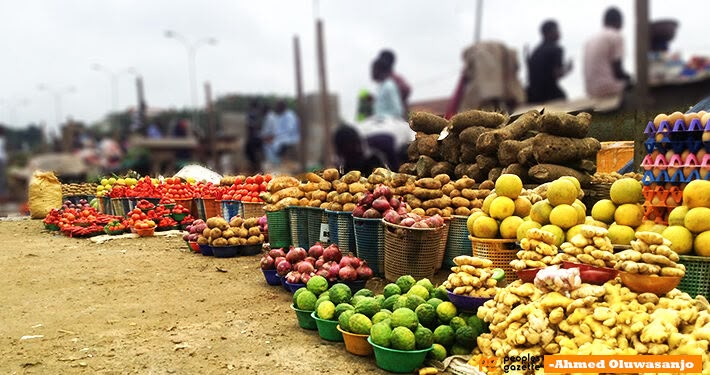
Food inflation exceeded 20 per cent in 19 Nigerian states in October 2026, despite a decline in the national annual rate, highlighting persistent price pressures across more than half of the country.

The affected states represent 52.8 per cent of Nigeria’s 36 states, according to an analysis of the latest Consumer Price Index data by The PUNCH.

The National Bureau of Statistics reported that national food inflation eased to 19.13 per cent in October from 19.59 per cent in September. However, the state-level figures showed that food price increases remained above 20 per cent in 19 states.

Ondo recorded the highest annual food inflation at 31.74 per cent, rising slightly from 31.49 per cent in September. Lagos followed at 31.43 per cent, although this represented a decline from 34.40 per cent, while Imo recorded 29.75 per cent, down from 33.79 per cent.

Oyo recorded 28.81 per cent, compared with 24.50 per cent in September, while Ebonyi’s rate rose from approximately 22 per cent to 27.96 per cent. Rivers recorded 25.33 per cent, compared with about 28 per cent previously.

Other states with annual food inflation above 20 per cent were Abia at 24.22 per cent, Delta at 23.91 per cent, Enugu at 23.48 per cent, Zamfara at 22.88 per cent, Ogun at 22.47 per cent, Yobe at 22.26 per cent, Anambra at 22.23 per cent and Kebbi at 22.21 per cent.

Akwa Ibom recorded 21.56 per cent, Edo 21.52 per cent, Sokoto 21.40 per cent, Ekiti 20.61 per cent and Kaduna 20.32 per cent.

The NBS confirmed that Ondo, Lagos and Imo recorded the highest year-on-year food inflation rates in October.

However, the monthly figures presented a different picture, showing that food prices declined nationally for the second consecutive month, although the pace of reduction slowed.

National food inflation stood at -0.75 per cent month-on-month in October, compared with -1.55 per cent in September. This represented an increase of 0.80 percentage points in the monthly inflation rate, indicating that average food prices were still falling but at a slower pace.

The NBS attributed the movement to changes in the prices of commodities including vegetable oil, sardines, green peas, frozen fish, locally produced rice, fresh catfish, beef tripe, palm oil and millet flour.

At the state level, Yobe recorded the highest monthly food inflation at 18.41 per cent in October, reversing a decline of 7.0 per cent in September. Kebbi followed with 16.45 per cent, compared with -4.9 per cent previously, while Sokoto recorded 13.0 per cent against -1.7 per cent.

Zamfara’s monthly rate rose to 8.7 per cent from 6.0 per cent, while Anambra recorded 4.3 per cent, compared with -0.3 per cent in September.

Enugu’s rate stood at 4.9 per cent, down from 14.5 per cent, while Abia rose to 2.6 per cent from 0.4 per cent. Ebonyi recorded 2.4 per cent against -2.1 per cent, Ogun 1.5 per cent against -0.4 per cent, and Edo 0.9 per cent compared with -2.8 per cent.

Imo and Ondo each recorded monthly food inflation of 0.6 per cent, although their rates moderated from 5.2 per cent and 2.6 per cent respectively. Kaduna, by contrast, recorded a monthly decline of 4.7 per cent, reversing the 3.2 per cent increase recorded in September.

Lagos recorded a 5.93 per cent monthly decline, compared with a 0.4 per cent increase in September. Rivers recorded -4.3 per cent against -2.0 per cent, while Delta posted -3.8 per cent compared with a 2.2 per cent increase.

Oyo recorded -2.6 per cent against 3.8 per cent, Akwa Ibom -1.5 per cent against -0.4 per cent, and Ekiti -0.4 per cent compared with -1.5 per cent previously.

Overall, 12 of the 19 states recorded positive monthly food inflation in October, while seven experienced declines, underscoring the uneven movement of food prices across the country.

The NBS cautioned against making direct comparisons between states without considering differences in consumption patterns and the weights assigned to individual food items in calculating their respective inflation rates.

Continue Reading

Trending

extrabetseo ajansıseo ajansıcasino siteleritrlisans pinterestgiftcardmall/mygiftgrandpashabet girişgrandpashabet güncel girişgrandpashabetgrandpashabet girişgrandpashabettaraftarium24dizipalgiftcardmall/mygiftjustin tvGrandpashabetGrandpashabetGrandpashabetcasino siteleriRadissonbetsweet bonanzacasino siteleripadişahbettaraftarium24taraftarium24rojadirectajustin tvcasinolevantjojobetjojobetjojobetcasibomholiganbet xcasinolevantcasinolevantjojobetjojobetholiganbetholiganbetholiganbetholiganbetjojobetgrandpashabetmatadorbetonwinsahabetgrandpashabetmarsbahis xmarsbahiscasinolevantcasinolevantcasinolevantgrandpashabetjojobetjojobetgrandpashabetsekabetmatbetimajbetcasibompusulabetvdcasinosuperbetincratosroyalbetcasibomholiganbetholiganbet girişholiganbetmarsbahiscasinolevantjojobetcasinolevantgrandpashabetgrandpashabetnesinecasino xwbahis xbetgaranti xgrandpashabet girişGrandpashabetjojobet