Connect with us

Business

FG Targets N1.1bn Private Sector Investment to Drive Power Sector Reforms

Published

on

The Federal Government has revealed plans to unlock N1.1 billion in private sector funding as part of a co-financing initiative aimed at addressing challenges in Nigeria’s power sector. This was announced by Abba Aliyu, Managing Director of the Rural Electrification Agency (REA), during the ongoing Nigeria Energy Summit in Lagos, which is focused on “Breaking Barriers to the New Energy Era: Clean, Reliable and Sustainable.”

Aliyu emphasized that, despite the significant hurdles the country faces in providing reliable electricity, the government remains committed to bridging the power gap.

“In as much as we know there are lots of challenges in terms of electricity, the Federal Government is committing a lot of resources and a lot of strategies to be able to address this electricity gap,” Aliyu said.

He highlighted that the $750 million already provided by the administration of President Bola Tinubu is expected to catalyze N1.1 billion in private sector funding as part of a co-financing effort. The REA’s approach focuses on providing grants and subsidies to encourage private sector participation in building the necessary infrastructure. In addition, the agency is actively working to mobilize N100 billion in local financing for developers to help further the development of critical energy projects.

Aliyu stressed the need to explore alternative energy sources, especially given the increasing viability of solar power. “Solar is now simple to install, and its economic feasibility has been demonstrated,” he noted. He added that the Minister of Power had tasked the REA with leveraging other renewable energy sources, including small hydro, micro-hydro, biomass, and wind power.

“In the next two to three weeks, you will see a notice of tender for a 336-kilowatt micro-hydro plant that we are partnering on. This is just one of the renewable energy projects in the pipeline,” Aliyu said. He further revealed that small and micro hydropower projects have been earmarked for locations in Katsina, Ondo, Ekiti, Cross River, Nassarawa, and Sokoto states, as part of efforts to diversify Nigeria’s energy sources.

Aliyu also shared progress on Nigeria’s mini-grid projects, noting that approximately 1.5 million Nigerians have access to interconnected mini-grids, while isolated mini-grids have provided electricity access to an additional 3 million people. Additionally, around 12 million Nigerians are now benefiting from stand-alone solar home systems and mesh grids. The country’s next phase of expansion for these systems is set to begin next month.

“The commercial viability of private sector players in the power sector must improve for the sustainability of these projects,” Aliyu stressed, underscoring that the financial viability of the infrastructure projects depends on the capabilities of the private sector implementing them.

“The entire sustainability of the mini-grid, as with any project finance infrastructure, is reliably computed upon the financial viability of the player that is implementing this. Whether it’s mini-grid, off-grid, or any infrastructure financing, that viability is subject to the commercial viability of the implementing app,” he stated.

The Nigeria Energy Summit also saw praise from industry stakeholders, with Hakeem Disu, co-founder of Lihon Energy, highlighting Nigeria’s leadership in Africa’s energy transition. Disu noted that the mini-grid and solar systems implemented by the REA are transforming the livelihoods of people in rural areas, boosting economic activities, and fostering investor confidence in renewable energy.

Disu explained, “The mini green and solar system that is coming from the Rural Electrification Agency is the way governments have pointed to improving livelihood and economic activities of people in rural areas. The project also improves investors’ confidence in Nigeria, with many likening it to a World Bank reward grant or a carbon credit for businesses providing electricity to rural communities.”

He added that renewable energy projects, especially solar power, could have a profound impact on Nigeria’s agricultural sector, where the majority of the population resides in rural areas. “By providing solar-powered irrigation systems and solar-powered dryers for preserving agricultural produce, the project can greatly enhance the livelihoods of rural farmers.”

Ade Yusuf, Exhibition Director, Energy Portfolio -MEA, Informa Markets, also spoke during the event, highlighting Africa’s increasing role in global economic growth due to its natural resource wealth and rising demand for investment and innovation in the energy sector. Yusuf emphasized that energy markets across Africa are transforming at an unprecedented pace, driven by a growing focus on sustainability, renewable energy, and climate change.

“Being in the market for 11 years now, the event has adapted to the global conversation on sustainability, energy transition, and climate change. Across this dynamic region, energy markets are transforming rapidly. We aim to create a conducive environment for policy development, investment attraction, and technology adoption in the renewable energy sector,” Yusuf remarked.

Continue Reading
Click to comment

Leave a Reply

Your email address will not be published. Required fields are marked *

Abuja Reports

FG Breaks Ground on $70m Passport Factory in Abuja

Published

on

By Ifunanya Stephanie


The Federal Government has commenced construction of a $70 million passport manufacturing facility in Abuja, with plans to produce six million passport booklets annually by May 2027 and eventually expand capacity to 10 million.

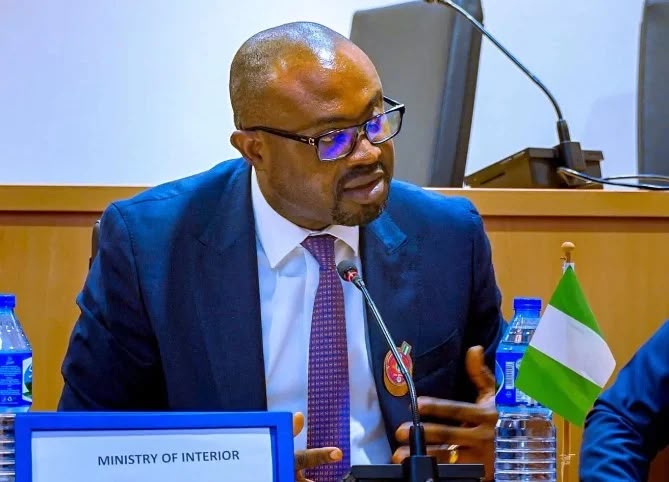
The Minister of Interior, Dr Olubunmi Tunji-Ojo, disclosed this on Friday during the groundbreaking ceremony for the National Passport Booklet Production Centre at the Nigeria Immigration Service headquarters in Abuja.

He said Nigeria currently requires between 1.8 million and two million passport booklets annually, adding that the proposed facility would not only meet domestic demand but also position the country to supply other African nations.

According to him, the project is being developed in partnership with Iris Smart Technologies and designed to produce electronic passports that meet the travel document standards of the Economic Community of West African States.

Tunji-Ojo said the facility would occupy 1.1 hectares, operate off-grid using solar power and be commissioned by President Bola Tinubu in May 2027.

“This project is about $70m without a dime from government,” the minister said, describing the investment as part of efforts to domesticate Nigeria’s passport production value chain and reduce dependence on foreign suppliers.

He said the initiative followed reforms introduced since 2023, including the automation of passport applications and approvals, the establishment of a data centre and the completion of a centralised passport personalisation centre at the NIS headquarters in September 2025.

Tunji-Ojo added that the government had made local manufacturing a condition for the continuation of its existing arrangement with the technology partner, describing the move as a backward-integration strategy.

He said the excess production capacity could enable Nigeria to serve the ECOWAS market and other African countries that currently source their passport booklets from Europe and the Americas.

Senator representing Edo North, Adams Oshiomhole, who performed the groundbreaking, described the project as a shift from importing passport booklets to domestic production.

The former Edo State governor said the development reflected a change in the country’s approach to industrialisation, arguing that Nigeria should manufacture products it had the capacity to produce rather than depend on foreign suppliers.

He also commended Tunji-Ojo for reforms in passport administration, citing improvements in the renewal process and recounting how members of his family had obtained Nigerian passports without the difficulties previously experienced.

The Comptroller-General of the Nigeria Immigration Service, Kemi Nandap, said the project represented an important step towards strengthening Nigeria’s control over the supply chain for its travel documents.

She recalled that passport booklet shortages had affected students, parents and other Nigerians, sometimes disrupting travel and admission plans.

Nandap said domestic manufacturing would strengthen document security, improve supply chain resilience, develop local expertise and enhance service delivery.

“History will not judge us by the promises we make at this groundbreaking ceremony, but by the institutions we build, the standards we uphold and the results we deliver,” she said.

Also speaking, Acting Assistant Comptroller-General of Customs, Doris Okonkwo, who represented the Comptroller-General of Customs, Bashir Adeniyi, said the project aligned with the government’s institutional modernisation agenda.

She said local production could help conserve foreign exchange, strengthen document security and reduce dependence on external suppliers.

The Director-General of the Infrastructure Concession Regulatory Commission, Dr Jobson Ewanife, said the commission would monitor compliance with contractual obligations to ensure the project was delivered according to agreed specifications.

He described the facility as part of the administration’s broader infrastructure development and reform efforts.

Continue Reading

Business

Wale Tinubu Urges SMEs to Build Systems for Sustainable Growth

Published

on

By Ifunanya Stephanie

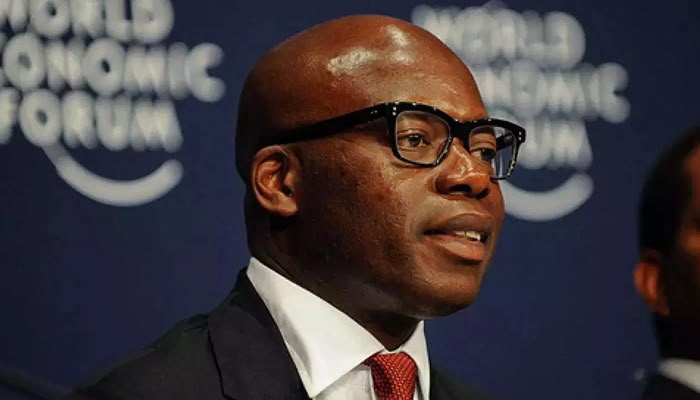
Oando Plc Group Chief Executive, Wale Tinubu, has urged Nigerian entrepreneurs to prioritise strong business systems, financial discipline and sound governance, saying these are essential to building sustainable enterprises capable of competing globally.

Tinubu said ambition alone was insufficient to sustain business growth, stressing the need for structured operations, proper financial records, long-term planning and disciplined execution.

He made the call while delivering the keynote address at GROW Nigerian 2026, the National MSME Conference organised by the Small and Medium Enterprises Development Agency of Nigeria (SMEDAN), held from November 8 to 10 at the Ecobank Pan African Centre, Victoria Island, Lagos.

The conference was attended by Lagos State Governor Babajide Sanwo-Olu, SMEDAN Director-General Charles Odii, German Deputy Consul-General Katharina Ziegler and other business leaders, policymakers and development partners.

Highlighting the contribution of small and medium-sized enterprises to the economy, Tinubu cited figures indicating that they account for 96.9 per cent of businesses, 88 per cent of employment and 46 per cent of Nigeria’s Gross Domestic Product.

He said the priority should be to strengthen their capacity to grow beyond small-scale operations into medium-sized enterprises, large corporations and globally competitive businesses.

“Nigerian giants are not built overnight. They are built through a series of bold decisions, executed with long-term commitment and persistence,” he said.

Drawing on Oando’s three-decade history, Tinubu recounted how the company started with modest family contributions in a converted garage before venturing into diesel trading and expanding into petroleum marketing, gas distribution and upstream oil and gas operations.

He attributed the company’s growth to calculated risk-taking, reinvestment, reliability and quality, noting that business opportunities must be supported by deliberate decisions and consistent execution.

Tinubu identified proper financial records, documented processes and audited accounts as important foundations for businesses seeking investment and preparing to scale.

“One of the most important steps for an SME is to begin documenting its operations and processes, and to maintain audited financial statements. These are essential foundations for building a structured business and preparing it for growth,” he said.

He also stressed the importance of working capital management, urging entrepreneurs to monitor cash positions, receivables, liabilities and inventory.

On access to finance, he advised business owners to explore different funding options, including commercial banks, development finance institutions, fintech companies, suppliers and joint venture partnerships.

“There is no single source of capital that is more important than another. Every source of financing, wherever it comes from, has a role to play in supporting business growth,” he said.

The Oando chief executive also identified ambition, capability, competitiveness and endurance as important attributes for building lasting businesses.

He urged entrepreneurs to invest in their employees, transfer institutional knowledge and establish processes that can be replicated as their organisations expand.

“The principles required to build a successful SME remain the same as those required to run a large enterprise. As you scale, the critical difference is your ability to replicate your systems, processes, and organisational DNA,” he added.

Addressing the challenges facing businesses, Tinubu acknowledged government efforts to improve infrastructure but said entrepreneurs must also develop the capacity to navigate policy changes, delayed approvals and other operational constraints.

He called for improvements in electricity supply, logistics, port operations and the ease of doing business, describing them as important conditions for helping small enterprises transition into larger organisations.

“These are areas that require commitment rather than significant financial resources. SMEs depend on improvements in logistics, port operations, and the ease of doing business to scale from small to medium-sized and ultimately large enterprises,” he said.

Reflecting on Oando’s evolution from a small trading operation into an integrated energy group, Tinubu said the company continued to rely on the entrepreneurial principles that shaped its beginnings.

“Even though we are a large conglomerate today, we still think like an SME. The principles that shaped our beginnings continue to inform how we build and grow the business,” he said.

Continue Reading

Abuja Reports

Milestone Global Bank Gets CBN Nod, Targets Abuja Launch

Published

on

By Ifunanya Stephanie


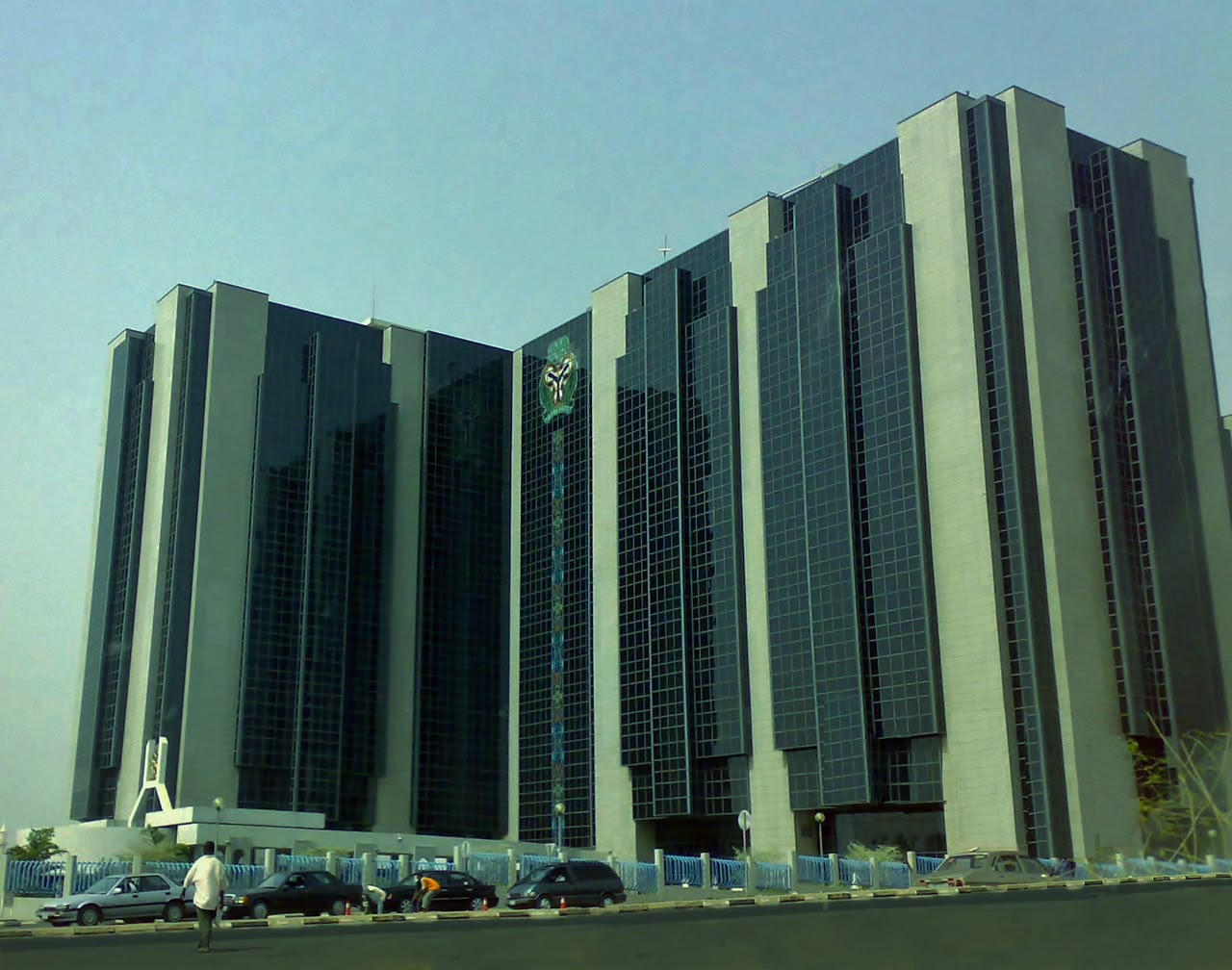
Milestone Global Bank Limited has received final approval from the Central Bank of Nigeria (CBN) to operate as a regional non-interest bank, with plans to establish its first physical branches in Abuja, Kano and Kaduna.

The approval clears a major regulatory hurdle for the institution as it prepares to enter Nigeria’s banking sector, although it has yet to announce a commencement date or provide addresses for its proposed branches.

The bank disclosed the development in a statement, saying it had satisfied the CBN’s requirements on capital, corporate governance and compliance with non-interest banking regulations.

Its Managing Director and Chief Executive Officer, AbdulFattah Olanrewaju Amoo, described the approval as a significant milestone, saying the institution was now working to complete the remaining operational requirements ahead of its launch.

He said the bank intended to serve individual customers, businesses, corporate organisations and government agencies through a combination of digital banking services and physical branches.

According to the bank, its initial expansion plan covers Abuja, Kano and Kaduna, with the intention of extending its presence to other parts of the country.

Amoo said the institution would deploy technology, data and automation to improve service delivery, efficiency and accessibility.

The CBN’s recapitalisation framework requires regional non-interest banks to maintain a minimum paid-up capital of ₦10 billion, compared with ₦20 billion for national non-interest banks.

Non-interest banking operates without conventional interest-based lending and instead uses structures such as asset-backed financing, leasing, trade-based transactions and profit-sharing arrangements.

Milestone Global Bank’s entry is expected to add another operator to Nigeria’s non-interest banking segment, which already includes Jaiz Bank, TAJBank and Lotus Bank.

However, the bank has not released details of its proposed products, account-opening procedures, eligibility requirements or pricing.

Its planned Abuja presence could expand the financing options available to businesses and individuals in the capital, but the impact will depend on the products introduced and the terms under which they are offered.

The bank is expected to announce further details as it concludes preparations to commence operations.

Continue Reading

Trending

extrabetseo ajansıseo ajansıcasino siteleritrlisans pinterestgiftcardmall/mygiftdinamobetgrandpashabet girişgrandpashabetdinamobetGrandpashabettaraftarium24dizipalgiftcardmall/mygiftjustin tvGrandpashabetGrandpashabetGrandpashabetDeneme Bonusu Veren SitelerCasibomcasino siteleriultrabettaraftarium24taraftarium24rojadirectajustin tvholiganbetholiganbetholiganbetgrandpashabet güncel girişgrandpashabetgrandpashabetgrandpashabetgrandpashabetgrandpashabetgrandpashabetgrandpashabetgrandpashabetgrandpashabetholiganbetcasibomjojobetholiganbetholiganbetgrandpashabetholiganbetholiganbetholiganbettipobettipobettipobetgrandpashabet girişgrandpashabetgrandpashabetgrandpashabetcasinolevantbetgarantipusulabetmarsbahis girişmarsbahismarsbahis girişpusulabet girişcasibomholiganbetholiganbetholiganbet girişholiganbetmarsbahisholiganbetgrandpashabetgrandpashabetsekabetnesinecasino xwbahis xbetgaranti xgrandpashabetGrandpashabet