Connect with us

News

5 Things to Know About the Newly-Launched Restorative Justice System in FCT

Published

on

The Federal Government has recently approved the adoption of the restorative justice system in the Federal Capital Territory (FCT), Abuja. This innovative approach prioritizes the needs of crime victims over mere punishment for offenders, offering an alternative to conventional court proceedings. Here are five crucial aspects to know about this transformative system.

1. A Shift in Focus: From Punishment to Healing

The core principle of the restorative justice system is its focus on healing rather than retribution. During a recent workshop on its implementation, Mohammed Abubakar, Director of Public Prosecution of the Federation (DPPF), emphasized that this model seeks to create fair outcomes that promote healing for all parties involved. By shifting the focus from punishment to restorative measures, the system aims to mend the relationship between victims, offenders, and the community, thereby fostering a sense of accountability and empathy.

2. Benefits for Victims and Offenders

Restorative justice offers numerous benefits, particularly for victims. By actively involving them in the justice process, the system provides a platform for victims to express their feelings and needs, which can lead to emotional relief and closure. For offenders, participating in restorative justice can encourage accountability for their actions and offer a chance for rehabilitation. The approach not only addresses the harm caused but also encourages offenders to understand the impact of their actions on others, ultimately contributing to reduced reoffending rates.

3. Addressing Overcrowding in Correctional Facilities

One of the practical advantages of the restorative justice system is its potential to decongest correctional facilities. By offering alternatives to incarceration, such as mediation and community service, the system can help alleviate the burden on overcrowded prisons. Abubakar highlighted that quicker resolutions to cases are possible under this model, which can significantly improve the efficiency of the justice process.

4. Collaborative Efforts for Successful Implementation

The success of the restorative justice system hinges on the active participation of various stakeholders. Abubakar stressed the importance of collaboration among law enforcement, the judiciary, traditional institutions, government agencies, civil society, and communities. Engaging these diverse groups ensures that the restorative justice process is well-supported and effectively implemented, paving the way for a more cohesive and responsive justice system.

5. Addressing Concerns and Misconceptions

Despite its many advantages, the restorative justice approach faces skepticism, particularly regarding accountability and its application to serious crimes. Abubakar reassured critics that restorative justice is not a ‘soft’ option but a rigorous process emphasizing responsibility and the active participation of offenders in repairing the harm caused. He argued that the model seeks to address the root causes of crime and conflict rather than merely punishing the symptoms, making it a viable alternative to traditional justice systems.

During the workshop, the Etsu of Kwali, HRH Luka Ayedoo, praised the Federal Government’s initiative and called for its implementation nationwide. He pointed out the challenges of overcrowded correctional centers and highlighted the need for traditional rulers and community leaders to play active roles in the system’s success. Leticia Ayoola-Daniels, Director of the Administration of Criminal Justice and Reform Department at the Federal Ministry of Justice, echoed these sentiments, describing restorative justice as a progressive reform that seeks to heal rather than merely punish.

Continue Reading
Click to comment

Leave a Reply

Your email address will not be published. Required fields are marked *

Abuja Reports

Atoyebi Adewumi Wins 4th National Essay Competition, Beats 2,000 Contestants

Published

on

By

By Samson Adeyanju

Atoyebi Adewumi has emerged winner of the fourth edition of the National Essay Competition, beating more than 2,000 contestants in an intellectual contest aimed at promoting academic excellence, critical thinking and creative writing among young Nigerians.

The competition, which focused on the relevance of taxation to national development, challenged participants to examine the role of tax revenue in financing public services, stimulating economic growth and strengthening the relationship between government and citizens.

The initiative provided a platform for young Nigerians to demonstrate their writing skills, articulate informed perspectives on national issues and contribute ideas towards building a more responsible and progressive society.

Speaking after being declared winner, an elated Adewumi expressed gratitude to the convener, Foluso Sylvanus Ojo, and the organising team for providing young Nigerians with an opportunity to showcase their intellectual abilities.

“I am so glad, very, very glad, to have this privilege of emerging as the winner. I am grateful to the convener and the entire team, as well as everyone who supported this vision,” Adewumi said.

In his remarks, Ojo expressed concern over the tendency to criticise the attitudes and lifestyles of younger generations without providing adequate opportunities to nurture their talents and channel their energies towards productive pursuits.

He called on the government, corporate organisations and nongovernmental organisations to invest more in educational initiatives that promote intellectual excellence, creativity and responsible citizenship.

According to him, sustained investment in academic competitions and youth development programmes would encourage discipline, innovation and a stronger commitment to national development.

Drawing a comparison with the substantial cash prizes awarded in some reality television competitions in Nigeria, Ojo argued that students and intellectually gifted young Nigerians deserved greater recognition, financial support and encouragement.

“I believe the government should support initiatives like this because individuals need supportive hands, especially from the government. When they receive such support, they become more confident and motivated to continue their good work,” he said.

Ojo maintained that society could not continue to complain about the attitudes and lifestyles of young people without deliberately investing in programmes that encourage positive values and productive engagement.

The fourth edition of the competition also underscored the importance of tax awareness among young Nigerians, highlighting how effective taxation, transparency and accountable governance could contribute to improved infrastructure, education, healthcare and other essential public services.

Beyond celebrating the winner, the competition reinforced the need to identify, encourage and empower emerging intellectual talents capable of contributing meaningfully to Nigeria’s development.

Winner of the 5,000,000 naira

Winner of 3,000,000 naira

Winner of 2,000,000

All the participants 

Continue Reading

Abuja Reports

20 Finalists Begin Final Stage of National Essay Competition

Published

on

By

By Samson Adeyanju

Twenty finalists from across Nigeria have begun the final stage of the fourth edition of the National Essay Competition in Abuja, following an orientation session designed to prepare them for the decisive examination.

The finalists arrived in the Federal Capital Territory for a four-day, all-expenses-paid programme featuring the essay examination, institutional tours and opportunities for learning and networking.

The competition, the brainchild of Mr Foluso Ojo, is sponsored by the Nigeria Revenue Service (NRS).

Ahead of the examination, the finalists participated in an orientation session led by Professor Omotosho Borisade of Ekiti State University, who serves as the competition’s umpire.

The session familiarised participants with the competition’s rules and regulations, examination guidelines and assessment criteria, helping them understand the requirements of the final stage.

The essay examination is scheduled to begin today at 9 a.m., after which the finalists are expected to embark on institutional tours around Abuja.

The programme is designed to extend beyond the contest itself, exposing the finalists to new learning opportunities, professional connections and experiences in the nation’s capital.

The competition brings together young Nigerians to demonstrate their writing ability, knowledge, creativity and critical-thinking skills as they compete for the top honours.

With the finalists prepared for the examination, attention now turns to their performance and the eventual emergence of the competition’s champion.


Continue Reading

News

Pastor Ogundipe Decries Lack of Integrity Among Educated Nigerians

Published

on

By

By Samson Adeyanju

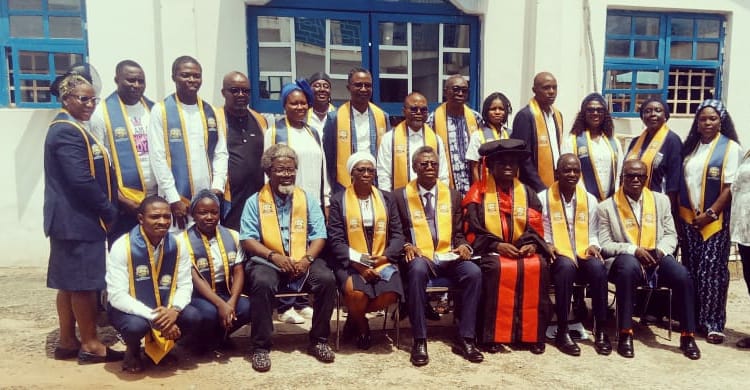
Pastor Alex Ogundipe, Chairman of the Governing Board of Christian Heritage International Bible College, Kubwa, Abuja, has expressed concern over the growing number of educated Nigerians who lack the character and integrity required to make meaningful contributions to society.

Ogundipe raised the concern during the matriculation ceremony of the institution’s 60 pioneer students, stressing that academic qualifications without moral discipline and upright character could undermine national development.

According to him, Nigeria has many knowledgeable and academically accomplished individuals whose inability to demonstrate integrity has negatively affected their contributions to their families, workplaces and communities.

“We have too many people in this country who are knowledgeable and wise in their own ways, but they do not have character and integrity. That affects their ability to impact their communities,” he said.

The cleric emphasised that education must go beyond the acquisition of certificates to the development of individuals who demonstrate honesty, accountability, faithfulness and commitment to serving humanity.

He explained that true integrity required consistency in personal conduct, whether at home, in the church, at work or within the larger society.

Ogundipe said the college was established not merely to impart biblical knowledge but to raise men and women whose lifestyles reflect Christian values and whose contributions would positively influence society.

He urged Christian leaders to demonstrate their faith through practical actions rather than mere religious declarations.

Speaking on Nigeria’s future, the cleric encouraged citizens to remain hopeful, pray for the country and contribute meaningfully to national peace, unity and development.

Earlier, the Rector of the institution, Pastor Samson Olukayode Aliyu, challenged the matriculating students to prioritise spiritual maturity and moral discipline alongside academic excellence.

Aliyu warned against examination malpractice, plagiarism, dishonesty and other forms of misconduct, stressing that academic certificates could demonstrate knowledge but could not substitute for good character.

“The Church does not only need gifted people; it needs godly people. We need leaders who will choose integrity over compromise, humility over pride, faithfulness over convenience and service over self-interest,” he declared.

He explained that the college offers six-month certificate programmes in theology and one-year diploma programmes in theology, leadership and prophetic studies.

One of the matriculating students, Akeem Omobolanle, who enrolled in the Diploma in Leadership programme, commended the institution’s approach to biblical education and expressed optimism that the training would strengthen his understanding of the Scriptures and prepare him for greater service in Christian ministry.

The ceremony marked the formal admission of the college’s pioneer students into its academic community.

Continue Reading

Trending