Connect with us

News

Samoa Agreement: Daily Trust Apologizes to FG Over Inaccurate Report

Published

on

In its July 4, 2024, edition, Daily Trust published a lead story titled “LGBT: Nigeria Signs $150 Billion Samoa Deal,” which generated significant interest and controversy across Nigeria. In response to this story, the Federal Government filed a formal complaint with the National Media Complaints Commission (NMCC), an independent media ombudsman. Following a thorough investigation, the NMCC ruled that several key aspects of the article were inaccurate, falling short of the journalistic standards expected from reputable media outlets.

In light of the NMCC’s ruling, Daily Trust has issued a formal apology to the Federal Government, its readers, and the wider public. The newspaper accepted the Commission’s verdict without hesitation and acknowledged the errors in its reporting.

The apology reads, “We accept the verdict of the NMCC without any equivocation. We apologize to the Federal Government for any inconvenience the story may have caused. We also apologize to our readers and the public for getting the story wrong in the first place.”

The NMCC’s investigation found that the article misrepresented the nature of the so-called Samoa Agreement, creating unnecessary controversy around the issue. This misreporting stirred public discourse and fueled misinformation, prompting the Federal Government to seek corrective action through the NMCC.

In response to the ruling, Daily Trust has pledged to strengthen its internal editorial processes to prevent similar occurrences in the future. While the newspaper’s existing editorial mechanisms have served it well for over 25 years, this incident has prompted a renewed focus on improving accuracy and journalistic integrity.

The newspaper added, “Our internal editorial mechanisms for reporting, editing, and approving news stories are robust and have served us well for more than a quarter-century. However, following this incident, we have taken additional steps to improve these mechanisms and enhance their effectiveness.”

Daily Trust emphasized its long-standing commitment to responsible journalism, stating that the publication’s mission has always been to promote national unity, security, and development through accurate and balanced reporting. The paper further clarified that it holds no bias toward any government, political party, or individual, focusing solely on presenting the truth in the public interest.

“We neither favor nor bear a grudge against any government, party, or individual. We simply seek the truth wherever it leads us and publish the result in the public interest,” the statement read.

Recognizing that mistakes can occur in the fast-paced world of journalism, Daily Trust acknowledged its history of self-correction. The newspaper referred to its previous internal ombudsman figures, including the late Hajia Bilkisu Yusuf and Mr. Dan Agbese, underscoring the publication’s dedication to maintaining the highest journalistic standards.

In its apology, Daily Trust extended its gratitude to the NMCC for its thorough and professional handling of the case, as well as to the Federal Government for its measured and democratic response. The newspaper particularly thanked Alhaji Mohammed Idris, the Minister of Information and National Orientation, for his professionalism in addressing the issue.

The statement concluded with an expression of appreciation to the newspaper’s readers, advertisers, and stakeholders for their continued support and patience during the controversy. Daily Trust assured its audience that it remains committed to upholding its reputation for reliable journalism, with an even stronger emphasis on accuracy moving forward.

“Last, but in many ways first, we thank our readers, advertisers, and other stakeholders for their patience and TRUST in us,”* the newspaper stated.

With the matter now resolved, Daily Trust seeks to move forward, reaffirming its commitment to truth and integrity in its reporting, while continuing to play its role in promoting informed public discourse across the country.

Continue Reading
Click to comment

Leave a Reply

Your email address will not be published. Required fields are marked *

Abuja Reports

FCTA Removes Fences, Gatehouses From Green Areas in Maitama, Wuse

Published

on

By Patrick Idowu

The Federal Capital Territory Administration (FCTA) has removed fences and gatehouses erected on designated green areas, parkland and road corridors in Maitama and Wuse districts of Abuja.

The exercise was carried out by the FCTA Development Control Department on the directive of the FCT Minister, Nyesom Wike, following the issuance of several notices to the affected property owners.

According to a statement by the department’s Public Relations Unit, the operation was supervised by its Sector Monitor, Tpl Osita Ume.

One of the affected sites was Plot 5406, Maitama District, along Alvan Ikoku Way, where officials removed a gatehouse and fence erected on an area designated as green space but subsequently redesigned for residential use.

Another operation took place on Sefax Street, Wuse Zone 4, where structures were removed from a park allocation situated along a road corridor whose allocation had been revoked.

The department clarified that the enforcement exercise at both locations affected only fences and gatehouses.

It said the removals followed several notices served on the affected parties and were carried out in compliance with ministerial directives.

The operation forms part of the administration’s efforts to enforce land-use regulations and prevent encroachment on designated public spaces and road corridors.

Continue Reading

Economy

FG’s ₦100,000 Family Grant: What Applicants Should Verify

Published

on

By Ifunanya Stephanie


An online registration portal advertising a ₦100,000 cash grant under the Nigeria Family Strengthening and Development Programme (NFSP) has attracted attention from Nigerians seeking financial support, but questions remain about the programme’s official authorisation and application arrangements.

The programme’s website identifies the Hope for Indigenous Family Support Initiative’s Coordinating Office as its coordinating body under the Federal Ministry of Youth Development and says the intervention is designed to support vulnerable households facing economic hardship.

A statement attributed to the programme’s management board, reported by PUNCH Online on Friday, November 20, says the initiative was announced by the ministry on September 10, 2026, with selected beneficiaries expected to receive ₦100,000.

However, the programme’s authorisation and the status of its advertised registration portal could not be independently confirmed through the ministry’s official website at the time of reporting.

The distinction is important because applicants are being asked to provide sensitive personal information, including their National Identification Number (NIN), family details and other supporting information.


Who Does the Programme Say Is Eligible?

According to the NFSP website and the statement attributed to its management board, prospective applicants must:/

– Be Nigerian citizens by birth.

– Be between 18 and 65 years old at the time of registration.

– Have a valid National Identification Number.

– Meet the programme’s poverty and vulnerability assessment criteria.

The website also lists a commitment to contributing to Nigeria’s socio-economic development among its registration requirements.

The programme says applicants’ NIN details will be verified through the National Identity Management Commission (NIMC).

It further states that meeting the basic requirements does not automatically guarantee selection, as beneficiaries are expected to be assessed based on household circumstances and vulnerability.


How Does the Advertised Registration Work?

The NFSP website directs interested individuals to its registration portal: nfsp.ng/signup

Its published guidelines indicate that applicants are expected to create an account, provide personal details, enter their NIN, complete family and employment information, upload supporting documents and submit their applications.

The website also instructs applicants to retain their registration numbers and download their acknowledgement slips.

However, the existence of an online registration page does not, by itself, establish that the portal has been officially authorised by the Federal Government.

Prospective applicants should therefore confirm the programme and its registration arrangements through recognised government channels before submitting sensitive information.


How Will Beneficiaries Be Selected and Paid?

According to the programme’s management board, selection will take place in phases across Nigeria’s six geopolitical zones.

The stated process involves identifying eligible households through social safety-net systems, verifying national identity records and assessing applicants based on poverty and vulnerability criteria.

The programme says selected beneficiaries will receive SMS notifications from designated payment providers, with payments made into their submitted bank accounts after the required consent procedures.

It also says beneficiaries will not necessarily receive payments at the same time because each phase will cover a limited number of households.

These arrangements are claims published by the programme and have not been independently confirmed by the ministry.


Fraud Warning: What Nigerians Should Know

The programme’s management board has warned applicants against paying individuals who promise to secure their inclusion on the beneficiary list or facilitate the release of the grant.

It specifically advises Nigerians not to pay anyone to add their names to the list or process the ₦100,000 payment.

Separately, the National Cash Transfer Office (NCTO) has issued a public warning about fraudulent cash-transfer registration websites, misleading links and individuals impersonating government officials.

The NCTO says beneficiaries under its existing cash-transfer programme are selected from the National Social Register of Poor and Vulnerable Households and that there is no public website for applying to that programme.

The NCTO warning concerns its own cash-transfer arrangements and does not, on its own, establish whether the separately advertised NFSP initiative is genuine or fraudulent.

Nigerians are advised not to share banking passwords, one-time passwords or sensitive identity information with unverified individuals and to avoid paying agents who promise guaranteed access to government assistance.


What Should Applicants Do?

Before proceeding with the advertised registration, interested Nigerians should seek confirmation from the Federal Ministry of Youth Development through its recognised communication channels.

The ministry lists info@fmyd.gov.ng among its official contact addresses.

Applicants should also verify that the registration portal is officially authorised and understand how their personal information will be collected, stored and used.

While financial assistance can provide important relief to vulnerable households, the protection of applicants’ identities and personal information must remain a priority.

Until the programme’s authorisation and registration arrangements are independently established, Nigerians should treat the advertised application process with caution.

Continue Reading

News

FRSC Records 941 Road Deaths Despite Q3 Decline in Crashes

Published

on

By Queensly Felix

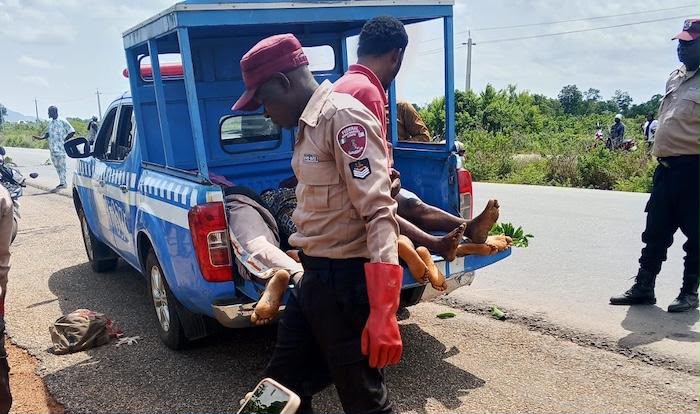
A total of 941 people died in road traffic crashes across Nigeria between July and September 2026, despite a decline in the number of accidents and casualties recorded during the period, according to the Federal Road Safety Corps (FRSC).

The figures, released by the Corps on Thursday, November 19, showed that Nigeria recorded 2,098 road traffic crashes and 5,864 injuries during the third quarter of the year.

The fatalities represent a 12.6 per cent decline from the 1,077 deaths recorded in the corresponding period of 2025.

The FRSC also reported a 13.8 per cent reduction in crashes, from 2,434 in the third quarter of 2025 to 2,098 in the same period this year.

Similarly, the number of people injured fell by 14.5 per cent, from 6,856 to 5,864, representing 992 fewer injuries.

The performance figures were presented at the Corps’ End-of-Year 2026 Corps Marshal Strategy Session with Commanding Officers at its National Headquarters in Abuja.


Fatalities Remain a Road Safety Concern

Despite the recorded improvements, the 941 deaths mean that an average of about 10 people lost their lives in road crashes every day during the three-month period.

The figures highlight the continuing human cost of road accidents, which affect private motorists, commercial drivers, passengers and other road users.

While the FRSC reported reductions across all three indicators, the number of fatalities shows that significant road safety challenges remain.


FRSC Highlights Road Safety Measures

The Corps attributed the decline in crashes, injuries and fatalities to improved operational efficiency, preventive interventions, public enlightenment and stronger enforcement of traffic regulations.

The Corps Marshal, Shehu Mohammed, said the agency was pursuing reforms aimed at improving its operational capacity and strengthening its response to road safety challenges.

He also highlighted investments in technology, infrastructure and personnel development as part of efforts to improve traffic monitoring and enforcement.

As the country approaches the festive travel season, the FRSC said it would intensify highway operations, improve traffic management and strengthen the deployment of ambulances, rescue teams and tow trucks along strategic routes.


Sustaining the Progress

The latest figures offer a measure of improvement compared with the same period last year, but they also underline the need for sustained efforts to prevent avoidable road deaths.

For motorists, responsible driving, vehicle maintenance, compliance with speed limits and avoiding dangerous road behaviour remain important safeguards.

For the authorities, effective enforcement, timely emergency response, public education and attention to high-risk routes will remain essential to reducing casualties.

Ultimately, the significance of the FRSC’s latest figures will depend not only on the reductions recorded but also on whether the progress can be sustained and more lives protected in the months ahead.

Continue Reading

Trending

taraftarium24seo ajansıseo ajansıiptvtrlisans pinterestgiftcardmall/mygiftdinamobetgrandpashabet girişgrandpashabetdinamobetGrandpashabettaraftarium24dizipalgiftcardmall/mygiftjustin tvGrandpashabetGrandpashabetGrandpashabetDeneme BonusuCasibomiptvkavbettaraftarium24taraftarium24rojadirectajustin tvbetsalvador xteosbetbahiscasino x1win xbetgitjojobetjojobet xjojobet xsonbahis xgrandpashabetgrandpashabetgrandpashabet güncel girişgrandpashabet girişmarsbahis girişholiganbet girişholiganbet güncel girişcasibom girişgrandpashabetgrandpashabetholiganbetholiganbetholiganbetholiganbetjojobetjojobetgrandpashabetsonbahis xsonbahis xgrandpashabetbetbey xesbet xcashwin xmatbetpusulabetsahabetmatbet girişpusulabet girişsahabet girişmatbetholiganbetmarsbahismarsbahis girişibizabet xjojobetjojobet xgrandpashabetbetpuan xnesinecasino xwbahis xbetgaranti xgrandpashabetjojobetjojobet