Oil marketers may begin the importation of Premium Motor Spirit, popularly called petrol, following the recent declaration by the Nigerian National Petroleum Company Limited that it would only fully offtake the product from the Dangote Petroleum Refinery if the market prices of the commodity were higher than the pump prices in Nigeria.
NNPC also declared that Dangote and other domestic refineries were free to sell directly to any marketer on a willing buyer, willing seller basis, adding that it had no desire or intention to become the distributor for any entity in a free market environment.
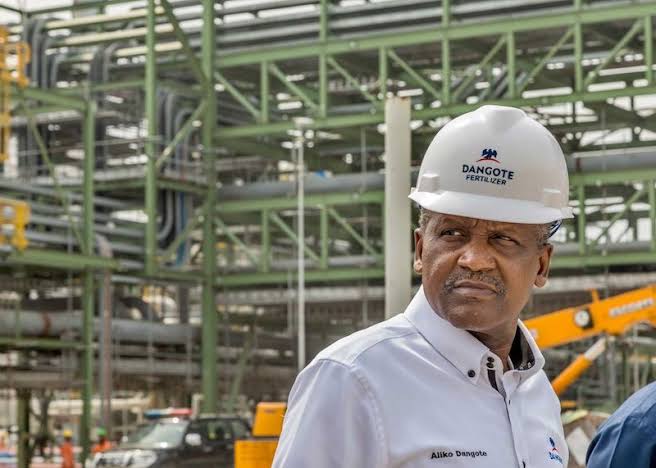
This is, however, contrary to what the President of Dangote Group, Alhaji Aliko Dangote, stated last week. The owner of the $20bn refinery had stated that the refinery was waiting for NNPC, adding that the national oil company would be the only off-taker of its petrol domestically.
Reacting to the slowdown in discussions between Dangote and NNPC, oil marketers stated that they would only source the product from wherever they found it cheaper, as this could be through importation.
Commenting on the price of Dangote petrol, the National Operations Controller, Independent Petroleum Marketers Association of Nigeria, Mustapha Zarma, said, “We have not contacted Dangote for now, but we may contact the refinery’s sales department this week to find out the price.
“If the price is competitive enough for one to buy and get his return on investment and the required margin, then we wouldn’t mind purchasing directly from him to complement what NNPC is bringing in or what NNPC would buy from Dangote.”
Zarma confirmed that since the Federal Government and NNPC had said the Dangote refinery would sell its product at the market price, this implied that the government would not intervene in the pricing of the commodity from the plant through subsidy.
Based on this, he noted that other dealers now had the opportunity to source the product from any producer at a cheaper price, whether locally or internationally.
He noted that some oil marketers currently imported diesel, while others bought the product from Dangote, adding that a similar situation would play out in the purchase of petrol, going by NNPC’s recent position on Dangote petrol.
“I believe that we are going to analyse the price of Dangote petrol and see the advantages of buying from Dangote viz-a-viz importation. Whichever we feel is cheaper will automatically attract everybody, especially if importation is cheaper.
“That will bring about competition and I don’t think the government will allow price monopoly. They would want a competitive market where the laws of demand and supply would determine the local price of refined petroleum products, just like diesel is right now.
“And with that, there is going to be some kind of equilibrium in the pricing and there is going to be guaranteed sustainability of supply,” the IPMAN official stated.
Industry observers say the Federal Government seems not ready to stop fuel importation following the refusal of NNPC to be the off-taker of Dangote’s petrol.
They, however, noted that with the recent hike in the pump prices of petrol, the government was systematically stopping subsidies on the commodity, following the recent revelation by NNPC that it spent over N7.8tn subsidising petrol.
At the presentation of the audited report and accounts of NNPC for the 2023 business year in Abuja last month, NNPC’s Chief Financial Officer, Umar Ajiya, admitted that the oil firm was shouldering a heavy subsidy burden on petrol imports.
He said the government directed NNPC to sell the petrol it imported at a price that is half the landing price. According to him, at times the Federal Government paid the money and it could as well net off for it.
While the official pump price of petrol is about N600/litre, the average landing cost is about N1,200/litre. Ajiya said the company covered about N7.8tn in “shortfall” in the first seven months of this year.
“What has been happening is that we have been importing PMS, landing at a certain price, and the government is telling us to sell it at half price. So, that gap between that landed price and the half price is what we call shortfall or we call it a subsidy,” the CFO had stated.
Also speaking on the development, the National Publicity Secretary of IPMAN, Ukadike Chinedu, said though marketers were ready to buy from Dangote, the revelation from NNPC showed that dealers were free to source their products from any cheaper source.
“From what is happening now, it means that the Petroleum Industry Act is being implemented, the removal of subsidies has come to stay and the price of petrol is to be determined by the economics of demand and supply.
“Now that NNPC has said they are not the sole off-taker of Dangote petrol, it then means that the price of the product would determine where we are going to buy it. If NNPC imports the product and its price is cheaper than that of Dangote, we will buy from NNPC. If Dangote’s price is cheaper than that of NNPC, then we will buy from Dangote. So, right now, competition will set in. Remember that diesel price rose as high as N1,600/litre and Dangote came in with his own at N1,200/litre, and the importers reduced their price to N1,100/litre.
“It further dropped to about N950 and now revolves between N950 and N1,100 for both the imported ones and the ones produced locally. By the time competition sets in, the product will sell cheaper,” Ukadike stated.
On whether marketers had started making plans to import if the imported product would be cheaper, he replied, “Our National President, Alhaji Abubakar Maigandi, has commenced discussions with some investors who are now in the process of securing funds going by the current trend in the business.
“So, we are talking with some foreign partners because you need to understand that independent marketers are the highest buyers of diesel from Dangote refinery because we control about 80 per cent of the filling stations nationwide. So, if Dangote PMS is cheaper we will buy it, but if importation is cheaper, we will go for it.”
President Bola Tinubu recently directed that NNPC should sell crude to Dangote and other domestic refineries in naira.
The President’s Special Adviser on Revenue, Zacch Adedeji, who also serves as Chairman, Federal Inland Revenue Service, explained that the move would mitigate Nigeria’s heavy reliance on foreign exchange for crude oil imports, accounting for roughly 30 to 40 per cent of its forex expenditure.
The revenue chief said that by denominating crude oil transactions in naira, the government expected to significantly lighten its forex burden, with estimated annual savings of $7.3bn. It is also expected to reduce monthly forex expenditure on petroleum products to $50m from approximately $660m.
“Monthly, we spend roughly $660m in these exercises, and if you analyse that, that will give us $7.92bn savings annually,” he stated.
The PUNCH reports that while licensed individuals have been importing diesel into Nigeria, NNPC remains the sole importer of petrol under the current administration.
Despite being the largest oil producer in Africa, Nigeria depends on imported petroleum products due to low refining capacity.
In May, Dangote said Nigeria would no longer import fuel the moment his refinery commenced production of petrol.
But unless there is an intervention from the President, Dangote’s plan to end fuel importation may not be achieved anytime soon, even as the $20bn refinery unveiled its PMS last week.
The NNPC, in a statement by its spokesman, Olufemi Soneye, said on Saturday that it would not buy Dangote PMS unless it was cheaper than that of the international market.
This is contrary to claims by Dangote that the refinery was waiting for the NNPC to roll out its product.
On Saturday, NNPC stated that it would only fully offtake petrol from the Dangote refinery if the market prices of PMS were higher than the pump prices in Nigeria.
The NNPC also declared that Dangote and any other domestic refineries are free to sell directly to any marketer on a willing buyer, willing seller basis, saying it had no desire or intention to become the distributor for any entity in a free market environment.
“The recent changes in PMS prices have no impact on the DRL or any other domestic refinery’s access to the Nigerian market. In fact, if current prices are perceived as high, it presents an ideal opportunity for the refinery to sell its products at lower prices in the Nigerian market,” Soneye stated.
Soneye added that Dangote refinery could lower its price if it felt the new prices were too high.
“We emphasise that there is no guarantee of lower prices associated with domestic refining compared to any global parity pricing framework, as confirmed by the DRL. The NNPC Ltd will only fully off-take PMS from the DRL if the market prices of PMS are higher than the pump prices in Nigeria,” the NNPC said.
This statement from the NNPC could be an indication that the NNPC was not ready to stop importation, especially as its refineries ere yet to become operational.
Since the unveiling of its PMS, the NNPC appeared to have turned its back against the Dangote refinery.
While unveiling the 650,000-capacity refinery, Dangote stated that the facility would roll out petrol whenever NNPC was ready.
Dangote disclosed that the petrol would get to the filling stations in the next 48 hours (from Tuesday) after all arrangements with NNPC were concluded, saying the queues would be over soon.
He emphasised that the NNPC would sell and distribute the product, under the current naira crude sale arrangement.
“Once the NNPC is ready, we roll,” Dangote said.
But it seems that talks between the two companies have collapsed and this means fuel importation might continue.
In the past few days, the NNPC has in different statements denied that it would fix the price for Dangote or be its sole distributor.
This was after the state-owned energy firm said it was given a September 15 timeline by the refinery to lift its petrol
’
A reliable source close to Dangote refinery expressed concerns over the turn of events.
The source, who spoke on condition of anonymity because she was not authorised to speak on the matter, said NNPC had been the one fixing petrol prices over the years, wondering why it was trying to relinquish that duty now.
The source also denied that Dangote refinery gave NNPC a September 15 deadline to lift its fuel.
She added that those making money from fuel importation were the forces trying to stop the sale of Dangote PMS locally.
“Dangote is not a regulator, those in NNPC are just trying to be clever, they want to shift the blame to somebody else. This is something they have been doing for many years.
“Some people are embittered, this is what they have been doing over the years, embezzling money,” our source said.
On pricing, she added, “I don’t know if there is any price for now. We all know what is going on. These is propaganda from these NNPC people. They know what they have done and they want to cover up. Very soon, everybody will know the actual quantity of fuel we consume in this country.”
IPMAN president Abubakar Maigandi told newsmen that the independent marketers were waiting for PMS from NNPC Retail.
“We are still collaborating with NNPC. I’ve called their officials and my marketers are supposed to have started loading. They said they would start loading them. So, we are still waiting.
“According to the information from the NNPC, we learnt that there is enough supply. So, we are waiting for them if they truly have enough supply because we already paid,” Maigandi stated.