News
Tinubu’s Compressed Natural Gas Initiative to Revolutionize Nigeria’s Transport Sector, Says PCNGi CEO Michael Oluwagbemi

In an exclusive interview with Engineer Michael Oluwagbemi, Programme Director/CEO of the Presidential Compressed Natural Gas Initiative (PCNGi), significant insights were revealed regarding the initiative’s transformative potential for Nigeria’s economy and transport sector.
When questioned about the initiative’s likelihood of success, Engr. Oluwagbemi emphasized President’s profound understanding of the oil and gas sector, coupled with a resolute commitment to leveraging natural gas to bolster the nation’s economy. Highlighting recent directives from the President to prioritize the adoption of Compressed Natural Gas (CNG) in federal agencies’ vehicle procurement processes, Engr. Oluwagbemi underscored a pivotal shift towards actionable measures rather than mere rhetoric.

Oluwagbemi said “Mr President is not a novice in Oil & Gas sector, having started his career in ExxonMobil. So he understands how you can use gas to transform the nation’s economy. The commitment of the political leadership of Mr President, his commitment to the idea of CNG and natural Gas, driving Nigeria’s economy is second to none.”
The essence of the programme, as elucidated by Engr. Oluwagbemi, revolves around grassroots engagement and collaboration with various stakeholders, including state and local governments, transport associations, and labor unions. This inclusive approach aims to ensure effective implementation and regulation of CNG adoption across all levels of governance.
Regarding the rollout timeline, Engr. Oluwagbemi expressed optimism, citing imminent launches of conversion and refueling centers, with the first scheduled for May 29th in Ilorin. He projected widespread deployment of CNG-powered vehicles across neighborhoods by June, alongside the distribution of conversion kits to facilitate the transition of existing petrol vehicles to CNG.
Responding to concerns about product availability, Engr. Oluwagbemi assured that significant strides have been made, with existing fleets already operating on CNG routes from Lagos to Kano.
Moreover, he emphasized the private sector’s increasing investment in CNG infrastructure, buoyed by government incentives and regulatory mandates. With plans to expand CNG stations nationwide and a mandate for petrol stations to install CNG dispensers, Engr. Oluwagbemi affirmed Nigeria’s abundant gas reserves as a pivotal resource driving this transformative initiative.
INTERVIEW TRANSCRIPT
Interviewer: This is not the first time a similar initiative has been launched and failed; why will it work this time?
Engr Mike: Mr President is not a novice in Oil & Gas sector, having started his career in ExxonMobil. So he understands how you can use gas to transform the nation’s economy. And he had fully committed to the idea that, let’s sell our oil for export revenue, let’s sell it in a refined form, use it in a refined form. But, let us also leverage our gas to industrialize the country to create jobs and drive our transport sector. And that is what is different – the commitment of the political leadership of Mr President, his commitment to the idea of CNG and natural Gas, driving Nigeria’s economy is second to none.
We just saw it two days ago when he banned all federal agencies from procuring petrol vehicles saying going forward, all of them must commit to buying and purchasing CNG. And at the FEC meeting yesterday, he gave the approval for the purchase of CNG powers vehicles to one of the major agencies( the customs) to buy 200 CNG vehicles that tells you the man is not just talking, but he is about action and that is the difference we have with the past governments. In the past what we have is government will pay confectionery alibi to say no we want to do CNG or natural gas, but then government goes around to buy petrol gas. Mr President says NO. We are able to save 40 to 70 per cent on petrol costs.
Mr President believes the country can save money through Compressed Natural Gas.
Interviewer: What is the essence of this programme?
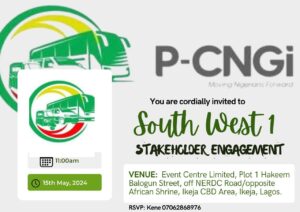
Engr Mike: It is to drive support at the grass root . The thing about government policies is that, the federal government is huge and the Federal Government is sitting at Abuja but for it to regulate ,we must engage with state, local government and other civil unions like the Keke NAPEP association and other major players in the transport industry. Today stakeholder meeting consist of all those involved in the transport sector,the head of transport agencies, labour unions and other transport associations. So this is why we are here.
Interviewer: So how soon do we expect these to be rolled out?
Engr. Mike: It is already being rolled by May 29th we will have the first launch of a major conversion and refueling center in Ilorin and even before then we will be receiving vehicles and taking over tricycles.
In the month of June all of the vehicles will start showing up in your neighbourhood, we are also going to have a lot of conversions kits. The key in this country is how do we convert the existing 10 million PMS vehicles that we have in Nigeria and Mr president is saying we need to convert about 1 million of them and take 10% of our current petroleum which is 6 million vehicles, that is 6 million multiplied by almost 1000 which is an effective subsidy of almost 6 million naira a day, let us convert it to gas. If you understand the state and you understand the calculations, it makes absolute sense. So Mr president is saying let us do the right thing, let us convert our petrol and diesel vehicles to gas and make money for the nation cause the gas we have right now we are flaring it,we are flaring it cause we don’t have a use for it. Now let’s make use of it ,so we are not just going to save the money on subsidy we will make money and the nation will sell gas and this gas is valuable and we can begin to power the economy and create jobs.
Interviewer: Now the issue is the availability of these products, just as you have pointed out, how do you move from Lagos to Kano to Sokoto, how do you get CNG fuel?
Engr. Mike: We already have vehicles going from Lagos and all the way to Kano already on CNG. Dangote has 14 thousand trucks,4 thousand of them are running on CNG already and this trucks are going all the way to Kano. So, there is already CNG technology because the compressed allows you to go with a lot of gas and run a long mile before you get to the next point. Also this vehicles we are converting can still run on PMS,PMS now becomes a backup ,so you run on gas and if you get to find gas you buy again but PMS will always be there as a backup. But most importantly the private sector is seeing that government is buying natural gas vehicles and seeing that we are converting 1 million vehicles, they are investing.
As at December last year we had less than 17 stations in Nigeria but by the end of the month there will be 60 and by the end of July we will have almost 120. We already have 120 applications waiting for approval by NMPDRA. In addition to this is the fact that all the petrol stations in Nigeria must install gas dispensers,this is the new rule if you want to remain in business of refueling in Nigeria in the next 2 to 3 years.
They have been giving a window to make sure they install CNG dispensers. The gas is available in abundance. Nigeria has one of the biggest gas reserves on the continent. 30 of Nigeria’s 36 states have gas, so there is no problem with gas, we have problem with compressing and dispensing and we are already solving that problem by signaling to the private sector the direction we are moving as a government and as a people, and you have to invest there so that you can make profit.