Connect with us

Business

FULL LIST: 16 Banking Transactions Not Affected By New CBN’s Cybersecurity Levy

Published

on

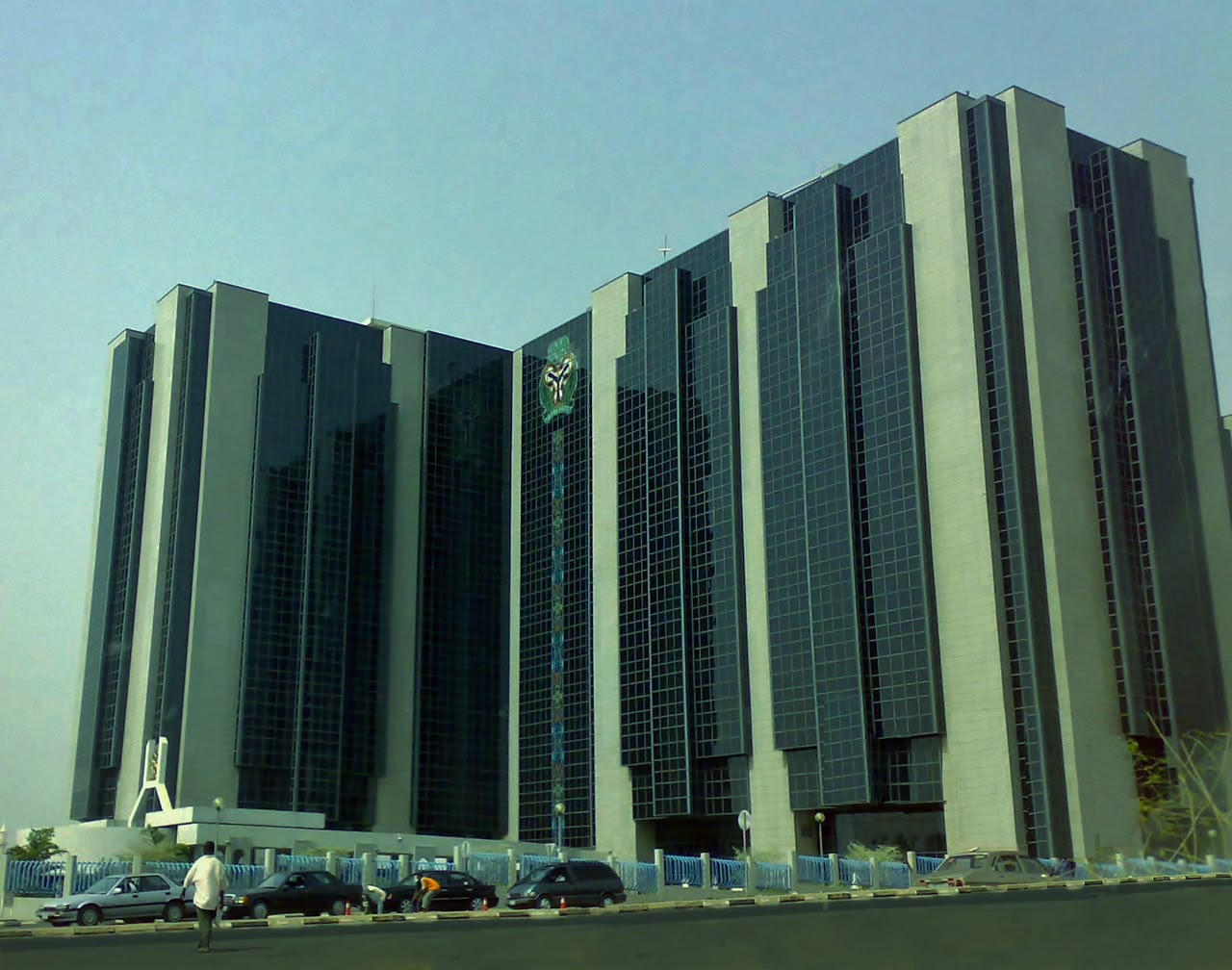
The Central Bank of Nigeria (CBN) has mandated all banks to levy a 0.5 per cent cybersecurity charge on electronic transactions within the country, with exceptions for 16 specified banking transactions.

In a circular jointly signed by Chibuzo Efobi, Director of the Payments System Management Department, and Haruna Mustafa, Director of the Financial Policy and Regulation Department, the CBN announced that the cybersecurity levy would take effect two weeks from May 6, 2024.

The directive applies to all commercial, merchant, non-interest, and payment service banks, among others, who are instructed to initiate the implementation of the cybersecurity charges within the stipulated timeframe.

The circular outlined that the levy would be applied at the point of electronic transfer origination, with the deducted amount to be remitted by the financial institution. The charge will be reflected in the customer’s account with the notation, ‘Cybersecurity Levy.’

However, the CBN provided a list of 16 banking transactions exempted from the cybersecurity levy, including:

  1. Loan disbursements and repayments
  2. Salary payments
  3. Intra-account transfers within the same bank or between different banks for the same customer
  4. Intra-bank transfers between customers of the same bank
  5. Instructions from Other Financial Institutions to their correspondent banks
  6. Interbank placements
  7. Transfers between banks and CBN
  8. Inter-branch transfers within a bank
  9. Cheque clearing and settlements
  10. Letters of Credits
  11. Banks’ recapitalisation-related funding (bulk funds movement from collection accounts only)
  12. Savings and deposits, including transactions involving long-term investments
  13. Government Social Welfare Programmes transactions (e.g., Pension payments)
  14. Non-profit and charitable transactions, including donations
  15. Educational institutions’ transactions, including tuition payments
  16. Transactions involving the bank’s internal accounts, such as suspense accounts and escrow accounts.

Continue Reading
Click to comment

Leave a Reply

Your email address will not be published. Required fields are marked *

Abuja Reports

Milestone Global Bank Gets CBN Nod, Targets Abuja Launch

Published

on

By Ifunanya Stephanie


Milestone Global Bank Limited has received final approval from the Central Bank of Nigeria (CBN) to operate as a regional non-interest bank, with plans to establish its first physical branches in Abuja, Kano and Kaduna.

The approval clears a major regulatory hurdle for the institution as it prepares to enter Nigeria’s banking sector, although it has yet to announce a commencement date or provide addresses for its proposed branches.

The bank disclosed the development in a statement, saying it had satisfied the CBN’s requirements on capital, corporate governance and compliance with non-interest banking regulations.

Its Managing Director and Chief Executive Officer, AbdulFattah Olanrewaju Amoo, described the approval as a significant milestone, saying the institution was now working to complete the remaining operational requirements ahead of its launch.

He said the bank intended to serve individual customers, businesses, corporate organisations and government agencies through a combination of digital banking services and physical branches.

According to the bank, its initial expansion plan covers Abuja, Kano and Kaduna, with the intention of extending its presence to other parts of the country.

Amoo said the institution would deploy technology, data and automation to improve service delivery, efficiency and accessibility.

The CBN’s recapitalisation framework requires regional non-interest banks to maintain a minimum paid-up capital of ₦10 billion, compared with ₦20 billion for national non-interest banks.

Non-interest banking operates without conventional interest-based lending and instead uses structures such as asset-backed financing, leasing, trade-based transactions and profit-sharing arrangements.

Milestone Global Bank’s entry is expected to add another operator to Nigeria’s non-interest banking segment, which already includes Jaiz Bank, TAJBank and Lotus Bank.

However, the bank has not released details of its proposed products, account-opening procedures, eligibility requirements or pricing.

Its planned Abuja presence could expand the financing options available to businesses and individuals in the capital, but the impact will depend on the products introduced and the terms under which they are offered.

The bank is expected to announce further details as it concludes preparations to commence operations.

Continue Reading

Business

Nigerian Banks Expand Lending as Loan Demand Surges

Published

on

By Ifunanya Stephanie

Nigerian banks increased credit supply to households and businesses in the third quarter of 2026, following stronger demand for secured, unsecured and corporate loans, according to the Central Bank of Nigeria (CBN).

The development was accompanied by improved loan approval rates and declining default rates across major lending categories, although borrowing costs remained relatively high in some segments.

The findings are contained in the CBN’s Q3 2026 Credit Conditions Survey, which assessed lending trends, loan demand, approval rates and repayment performance across the banking sector.

In the secured lending segment, the loan demand index stood at 25.6, with consumer lending to households recording the strongest demand at 42.9, followed by credit for house purchases at 28.0. Mortgage and remortgage lending recorded 12.0, while lending to small businesses by households declined to -19.7.

Demand for unsecured credit also strengthened, with an overall index of 7.2. Overdrafts and personal loans to households recorded 24.7, while credit card lending contracted to -20.0.

Corporate lending recorded a demand index of 18.9, reflecting increased borrowing interest among small businesses, medium-sized private non-financial corporations and large companies, which posted indices of 22.6, 18.3 and 20.7, respectively. However, demand from other financial corporations weakened, recording -16.2.

According to the survey, banks attributed the increased demand for corporate credit largely to inventory financing, balance sheet restructuring and capital investments, which recorded indices of 18.6, 2.5 and 0.7, respectively.

The CBN also identified changing economic outlook, liquidity positions and market share objectives as major factors influencing banks’ decisions to expand secured lending. For unsecured credit, market share objectives, economic outlook and the cost and availability of funds were among the key considerations.

Meanwhile, the proportion of loan applications approved increased across secured, unsecured and corporate lending categories compared with the preceding quarter.

Despite the improved access to credit, borrowing costs remained a concern, as the spread between lending rates and the Monetary Policy Rate widened across several lending categories.

The spread for secured lending widened to -14.5 index points, while corporate lending spreads stood at -13.6 index points for medium-sized private non-financial corporations, -12.2 for other financial corporations, -11.0 for small businesses and -10.3 for large private non-financial corporations.


The latest findings suggest an improvement in credit availability across Nigeria’s banking sector, although the widening interest rate spreads indicate that stronger loan supply and approval rates have yet to translate into proportionately cheaper borrowing for businesses and households.

Continue Reading

Business

CBN Restores BDC Access to FX Market, Caps Weekly Purchases at $150,000

Published

on

By Huldah Shado

The Central Bank of Nigeria (CBN), has approved the participation of licensed Bureau De Change (BDC), operators in the Nigerian Foreign Exchange Market (NFEM), allowing each BDC to purchase up to $150,000 weekly.

The approval was contained in a circular dated February 10, 2026, signed by the Director of the Trade and Exchange Department, Dr. Musa Nakorji, and addressed to authorised dealer banks and the general public.

The CBN said the move is aimed at improving foreign exchange liquidity in the retail segment of the market and meeting the legitimate needs of end users, amid a widening gap between the official and parallel market exchange rates.

Under the new arrangement, licensed BDCs can access foreign exchange from the NFEM through any authorised dealer bank of their choice at the prevailing exchange rate.

The apex bank directed banks to carry out full Know-Your-Customer (KYC), and due diligence checks on BDC clients before selling foreign exchange to them.

It also imposed reporting and transparency requirements, mandating BDCs to submit returns electronically to the CBN.

In addition, the bank prohibited third-party transactions and limited cash settlement to a maximum of 25 per cent of each transaction.

Continue Reading

Trending

taraftarium24seo ajansıseo ajansıbetwoonyasal deneme bonusu veren sitelerddeneme bonusjustin tvtrlisans pinterestgiftcardmall/mygiftdinamobetgrandpashabet girişgrandpashabetdinamobetGrandpashabettaraftarium24dizipalgiftcardmall/mygiftjustin tvGrandpashabetGrandpashabetGrandpashabetDeneme BonusuCasibomkavbettaraftarium24taraftarium24rojadirectajustin tvjojobetjojobetcasibom güncel girişcasibom xcasibom girişcasibomcasinolevantcasinolevantpalacebetteosbetgameofbetbetgitholiganbetmarsbahis girişholiganbet girişholiganbet güncel girişcasibom girişgrandpashabetgrandpashabetholiganbetholiganbetholiganbetholiganbetjojobetjojobetradissonbetpalacebetpalacebetcratosroyalbetgrandpashabetbetgarantitambetmatbetpusulabetsahabetvdcasinoholiganbetsahabetcasibomsahabet girişvdcasino girişmarsbahis girişjojobetcasinolevantgrandpashabetbetbeytambetgrandpashabetgrandpashabetgrandpashabetjojobet