Connect with us

News

Peter Obi Urges Nigerian Government to Address Rising Insecurity

Published

on

Peter Obi, the presidential candidate of the Labour Party (LP), has expressed deep concern over the escalating insecurity in Nigeria, emphasizing that it cannot be allowed to persist.


Obi called on the government to implement more robust and innovative measures to tackle the security challenges plaguing the nation, particularly in light of the recent abduction of passengers traveling to Abuja in mass transit buses in Kogi State.


In a statement shared on his social media handle, the former Anambra State governor lamented the continuous spread of insecurity, banditry, and kidnapping across the country. He underscored the need for urgent attention to the security of lives and property, urging the government and relevant agencies to prioritize this issue.


Obi appealed to the perpetrators of such criminal acts to reconsider their actions and cease their activities. He expressed solidarity with the families of the kidnapped victims and called for concerted efforts to ensure their safe release and enhance overall security in the country.


Highlighting the gravity of the situation, Obi stressed that the prevailing insecurity, coupled with pervasive hunger and deepening poverty, poses a significant threat to the nation’s well-being. He emphasized the imperative for the government to adopt proactive strategies to address these challenges effectively and safeguard the future of Nigeria.


Continue Reading
Click to comment

Leave a Reply

Your email address will not be published. Required fields are marked *

Abuja Reports

Tinubu’s Abuja Visit Triggers Hours-Long Gridlock on Airport Road

Published

on

By Patrick Idowu


Motorists and commuters along Abuja’s Lugbe–Airport Road corridor were left stranded for hours on Thursday following traffic restrictions imposed by security operatives during President Bola Tinubu’s visit to Jabi.

The restrictions caused severe congestion along major routes, disrupted business activities and forced some commuters to pay higher transport fares to reach their destinations.

Tinubu was in Abuja to attend the public presentation of a six-volume publication, Wole Olanipekun Through the Cases, authored by Senior Advocate of Nigeria, Chief Wole Olanipekun, at the Body of Benchers Complex in Jabi.

A commuter, Adedoyin Ayinde, who travelled from Lugbe to Jabi, said a journey that ordinarily takes less than 30 minutes lasted more than three hours.

He described the disruption as unfair to residents who needed to attend to their daily activities.

Another commuter, John Okafor, said his usual 20-minute journey from Airport Junction to Jabi took nearly three hours.

“Normally, I spend about N1,500 commuting to my workplace, but because of the road closures, I had to pay N3,000. This is quite alarming, especially given the current economic situation where every naira counts,” he said.

A commercial driver, Obinna Eze, questioned the prolonged restriction of movement along a major route because of the President’s movement.

Similarly, a motorist, Usman Umar, said drivers had remained stranded for more than three hours without information about when the roads would reopen.

“We have been here for over three hours, and nobody has told us when the road will be cleared. People have businesses to attend to and other important activities, but we have been prevented from going about our normal duties simply because the President is passing,” he said.

Umar added that the prolonged congestion was wasting motorists’ fuel, with some vehicles at risk of overheating.

Thursday’s disruption came less than a week after Tinubu’s visit to the Shehu Shagari Central Mosque in Area 1, Garki, for Jumu’at prayers on November 13 triggered complaints over security restrictions and access to the mosque.

Some worshippers booed the President’s convoy as it departed, chanting slogans expressing opposition to his administration. Reports that stones were thrown at the convoy were disputed by the Presidency.

The incident led to the arrest of 78 suspects, who were subsequently ordered released by the President.

The latest traffic disruption has renewed concerns among residents about the impact of security arrangements during presidential movements, particularly along the Airport Road corridor, which serves commuters, workers, schoolchildren and travellers.

Residents are calling on the Presidency and security agencies to consider traffic-management arrangements that protect the President without unnecessarily disrupting the movement of other road users.

Continue Reading

News

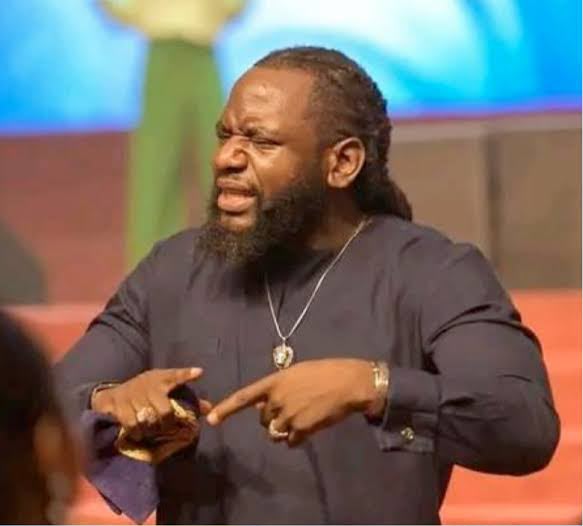
Lagos Court Restrains Jimmy Odukoya From Acting as Senior Pastor

Published

on

By Patrick Idowu

The Lagos State High Court has issued an interim order restraining Pastor Jimmy Odukoya from presenting himself as the Senior Pastor and Spiritual Head of The Fountain of Life Church, escalating the ongoing dispute over the leadership of the ministry.

Justice O. O. Adewunmi-Oshin granted the order on Wednesday, November 18, 2026, following an ex parte application by the Incorporated Trustees of The Fountain of Life Church.

The court also restrained Odukoya, whether acting personally or through representatives, from interfering with, disrupting or obstructing the church’s activities, administration and governance.

The teustees had approached the court, arguing that Odukoya was no longer entitled to occupy the position following the appointment of a successor by the church’s late founder, Pastor Taiwo Odukoya, in accordance with the church’s constitution.

In the enrolled order, the judge granted the trustees leave to commence the action under the pre-action protocol provided for in the Lagos State High Court (Expeditious Disposal of Civil Cases) Practice Directions No. 2 of 2019.

The court directed that the originating processes and accompanying documents be served on Odukoya, who is expected to file his response within the timeframe stipulated by the practice directions.

However, the order was made ex parte, meaning it was granted before Odukoya had an opportunity to respond to the application.

The judge expressly preserved his right to apply to have the order set aside or respond fully to the substantive claims after being served with the court documents.

The suit, marked LD/0126PRA/2026, was adjourned until December 1, 2026, for mention.

The court’s intervention follows an escalating leadership dispute that became public on November 17, when a faction of the church’s Board of Trustees announced that it no longer recognised Odukoya as Senior Pastor.

The trustees based their position partly on a December 2021 video recording in which the late founder reportedly named Pastor Kunle Areogun as his preferred successor and proposed that Jimmy serve as Areogun’s administrative assistant while overseeing the youth church.

Jimmy subsequently admitted retaining the recording despite his father’s reported instruction to delete it after a successful medical procedure.

The trustees argued that the recording supported their position that the late founder had designated another successor before his death in August 2023.

They also announced Pastor Rotimi Okpaise as interim spiritual and administrative leader pending consultations and the establishment of a substantive leadership structure.

However, Odukoya and the church rejected the purported removal, describing it as constitutionally invalid and insisting that his appointment in September 2023 was unanimously approved by the recognised Board of Trustees.

The church has maintained that he remains its duly appointed Senior Pastor and Chairman of the Board of Trustees.

In a statement following the court order, the Board of Trustees urged church members to remain calm, prayerful and united, adding that it would refrain from further comments on the substantive issues while the matter remains before the court.

The December 1 court appearance is expected to provide the next update in the dispute over the leadership and governance of the church.

Continue Reading

2027 General Elections

Atiku’s 2027 Ambition Faces Test Beyond Tinubu’s Incumbency

Published

on

By Patrick Idowu


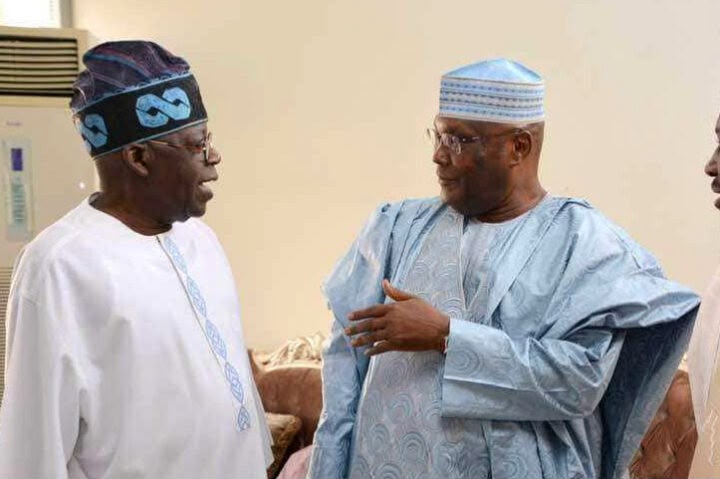
Former Vice-President Atiku Abubakar’s renewed efforts to build an opposition alliance ahead of the 2027 presidential election have brought fresh attention to the challenge facing President Bola Tinubu’s re-election bid, but the former vice-president must overcome significant political, legal and organisational hurdles before mounting a united challenge.

Atiku’s political engagements come amid growing opposition consultations aimed at presenting a stronger alternative to the ruling All Progressives Congress (APC). However, whether those efforts can produce a credible electoral coalition remains uncertain.

The November 5 Federal High Court judgment affecting the leadership of the African Democratic Congress (ADC), the platform on which Atiku emerged as its presidential candidate, has introduced another complication.

The court invalidated decisions taken by the David Mark-led leadership, including actions connected to the party’s candidate nominations. The ADC has challenged the ruling at the Court of Appeal and is seeking to prevent the Independent National Electoral Commission (INEC) from altering its leadership records and candidates’ nomination details while the appeal is pending.

The dispute has raised questions about the stability of Atiku’s political platform at a time when opposition parties are attempting to coordinate their preparations for 2027.


The 2023 Electoral Arithmetic

The 2023 presidential election remains an important reference point in assessing the potential strength of an opposition alliance.

According to official INEC results, Tinubu secured 8,794,726 votes, Atiku polled 6,984,520, while Labour Party candidate Peter Obi received 6,101,533 votes.

Combined, Atiku and Obi received approximately 13.1 million votes, about 4.3 million more than Tinubu’s total.

The figures suggest that cooperation between major opposition political forces could have considerable electoral significance. However, the arithmetic does not automatically translate into a winning coalition.

The candidates drew support from different regional, political and demographic constituencies, and there is no guarantee that their supporters would transfer their votes to a common candidate in a future election.

The challenge, therefore, is not simply bringing opposition leaders together but negotiating a political arrangement capable of retaining their respective support bases.


The Opposition’s Unity Test

Efforts to coordinate opposition parties have gained momentum through the Coalition for Democracy, which is expected to hold another summit in Abuja on November 23.

The six parties involved are the African Democratic Congress (ADC), Peoples Democratic Party (PDP), Nigeria Democratic Congress (NDC), Allied Peoples Movement (APM), Social Democratic Party (SDP) and Peoples Redemption Party (PRP).

The parties are expected to consider and sign agreements on democratic renewal, opposition cooperation and a national reform programme.

However, the proposed agreements do not yet establish that the parties have settled the more difficult question of presenting a single presidential candidate.

Atiku, Obi, Oyo State Governor Seyi Makinde and other political figures have their own ambitions, political constituencies and calculations. Reconciling these interests will require more than public declarations of unity.

The question of who leads the opposition ticket, which party provides the platform and how political influence is shared could determine whether the coalition progresses beyond consultations.


Tinubu’s Incumbency and the Economic Question

For Tinubu, the election will provide an opportunity to seek a second term and defend his administration’s record.

His political experience, the APC’s nationwide structures, alliances with influential political figures and the advantages associated with incumbency remain important factors in the contest.

However, the administration’s economic policies will also remain central to public assessment of its performance.

The removal of petrol subsidies, exchange-rate reforms and other economic measures have generated significant debate, particularly over their effects on household expenses, transportation, food prices and business operations.

The opposition is likely to make economic conditions and insecurity major issues in its campaign, while the administration will have to present its record and explain the outcomes of its policies to voters.

Ultimately, the extent to which these issues influence voting decisions will depend on developments before the election and how Nigerians assess the competing arguments.


Atiku’s Political Challenge

Atiku brings considerable political experience, having served as Vice-President from 1999 to 2007 and contested several presidential elections.

But his experience alone does not resolve the challenges confronting his latest ambition.

He must navigate the legal uncertainty surrounding the ADC, maintain his political support base, engage other opposition leaders and convince voters that his proposed alternative addresses their concerns.

His previous presidential defeats may also feature in public debates about political renewal, leadership and the emergence of new political choices.

For the opposition, the task extends beyond mobilising dissatisfaction with the incumbent administration. It must demonstrate that it can offer a coherent programme, maintain internal discipline and protect its electoral interests.


The Battle Beyond Atiku and Tinubu

The 2027 presidential contest is unlikely to be determined solely by the political rivalry between Atiku and Tinubu.

It will also test the ability of opposition parties to manage competing ambitions, resolve internal disputes and build a credible alternative capable of attracting voters across different regions.

The November 23 opposition summit will offer another opportunity to demonstrate whether political cooperation can move from discussions to practical commitments.

For Tinubu, the challenge will be defending his administration’s record and retaining public confidence. For Atiku and other opposition figures, it will be demonstrating that their political differences can be reconciled into an effective electoral strategy.

The decisive contest, therefore, is not only over who occupies the presidential ticket, but also over party stability, voter confidence, coalition-building and the ability to translate political support into votes.

Continue Reading

Trending

taraftarium24seo ajansıseo ajansıGrandpashabet Girişgiftcardmall/mygiftcasibomjustin tvtrlisans pinterestgiftcardmall/mygiftdinamobetgrandpashabet girişgrandpashabetdinamobetGrandpashabettaraftarium24dizipalgiftcardmall/mygiftjustin tvGrandpashabetGrandpashabetGrandpashabetGrandpashabetCasibomkavbettaraftarium24taraftarium24rojadirectajustin tvesbetbetpuanamgbahismercurecasinobetplaycasinoroyalcasinolevantcasinolevantpalacebetteosbetgameofbetbetgitholiganbetcasibommarsbahisgrandpashabetJojobet GirişJojobetJojobetnatobetbetgitromabetgameofbetgrandpashabet girişgrandpashabetradissonbetpalacebetpalacebetcratosroyalbetgrandpashabetbetgarantitambetmarsbahismatbetimajbetpusulabet girişmarsbahisholiganbet girişholiganbetholiganbetcasinolevantmarsbahis girişcasibomcasinolevantgrandpashabetbetbeytambetesbetjojobetgrandpashabet