Connect with us

Opinion

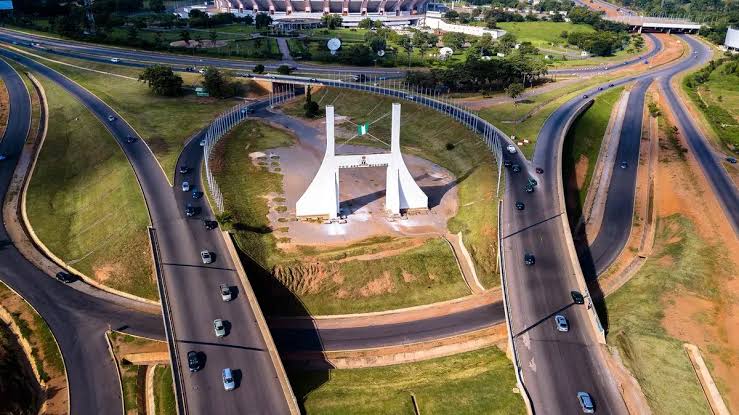
Is Tinubu Moving FCT Back to Lagos?

Published

on

Three years after moving its headquarters from Lagos to Abuja, the Federal Government, through the Minister of Aviation, ordered the immediate relocation of the Federal Airports Authority of Nigeria (FAAN) back to Lagos. As expected, this has generated a mixed reaction from Nigerians. While some commend the decision, others took a swipe at the President for the decision. Minister of Aviation, Mr. Festus Keyamo, attributed the decision of the FG to relocate FAAN back to Lagos as a means of saving costs and to stop wasting the meager resources of the government.

As expected, some northern political groups led by the Arewa Consultative Forum condemned the decision of the federal government to move FAAN and some departments of CBN from Abuja to Lagos. In a statement signed by the national publicity secretary, Prof T A Muhammad Baba, the group views it as a deliberate plot to undermine northern interests. The group called on the relevant agencies to retrace their steps and apply other honest means of addressing the alleged overcrowding in offices. They added that, contrary to the situation in Lagos, there is plenty of land in the federal capital territory for the expansion of offices and other infrastructural facilities, and such factors should not be used to obfuscate sinister motives, the group noted.

Also reacting, Senator Ali Ndume sounded a note of warning to President Bola Ahmed Tinubu on the issue. Ndume said there will be political consequences if the FG doesn’t revert the relocation immediately.

Are these reactions justifiable? President Bola Ahmed Tinubu is an advocate of special status for Lagos State. He has drummed support for the need for the FG to grant special status to Lagos, and now that he is President of Nigeria, some sections of the country will view the recent action as an attempt to gradually move the seat of power to Lagos through the back door.

But I think beyond this, we must see issues beyond the whims and caprices of regional sentiments. President Tinubu can’t unilaterally move the Federal Capital Territory back to Lagos without the approval/consent of the National Assembly.

Continue Reading
Click to comment

Leave a Reply

Your email address will not be published. Required fields are marked *

Abuja Reports

Abuja’s Property Agents: The Growing Business of Exploiting House Hunters

Published

on

By Patrick Idowu

Finding a home in Abuja is becoming an increasingly expensive and frustrating experience. Beyond rising rents, prospective tenants must navigate a property market where unclear agency arrangements, questionable listings, repeated inspection charges and unexpected fees can turn the search for accommodation into a costly ordeal.

For many house hunters, the challenge is no longer simply finding a property they can afford. It is establishing whether the person advertising it is genuinely authorised to do so, whether the apartment is still available and how much they will eventually have to pay before collecting the keys.

Across Lugbe, Kubwa, Gwarinpa, Lokogoma, Nyanya, Apo and other parts of the Federal Capital Territory, complaints about questionable practices by some property agents continue to raise concerns about transparency and accountability in the rental market.

One particularly frustrating practice is the collection of inspection fees before prospective tenants are allowed to view apartments. Some house hunters pay these charges only to discover that the advertised property has already been rented, while others encounter difficulties recovering their money.

The problem is compounded by the involvement of multiple intermediaries. A person advertising an apartment may not be the landlord’s appointed agent but one of several individuals claiming access to the same property. This creates room for duplicated listings, conflicting information, additional charges and potential fraud.

The Association of Estate Agents in Nigeria has itself raised concerns about the practice. In September, the association publicly opposed inspection fees, arguing that property viewing should be part of the professional agency process rather than a separate source of revenue. It also warned that lengthy chains of intermediaries can create unnecessary costs, misinformation and opportunities for fraud. <Cite refs={[“turn100926view2”]}/>

Beyond inspection charges, prospective tenants must contend with agency, agreement, caution and other administrative fees that can add substantially to the advertised rent.

While professional services should attract reasonable fees, the problem arises when charges are excessive, poorly explained, duplicated or introduced only after a prospective tenant has invested time and money in the search.

Some agents reportedly advertise properties at attractive prices only to introduce higher rental demands or additional charges when prospective tenants arrive for inspection. Others continue circulating listings without adequately confirming whether the properties remain available.

For people already struggling with the rising cost of living, these practices impose an additional financial burden on an already difficult process. A house hunter may spend considerable money visiting several properties without securing accommodation, only to face another round of charges when a suitable apartment is eventually found.

It is important, however, not to paint every property agent with the same brush. Many operate professionally, invest time and resources in finding tenants for landlords and deserve fair compensation for legitimate services. But the actions of unscrupulous operators should not be allowed to undermine public confidence in the entire profession.

More importantly, Abuja’s rental market cannot continue to depend largely on informal arrangements when accommodation is an essential need and the financial stakes are often high.

There are already legislative efforts to address some of these concerns. The Federal Capital Territory Rental Payments (Regulation) Bill, 2026, which scaled second reading in the House of Representatives on November 4, proposes a regulatory framework for rental transactions in the FCT.

Among other provisions, the bill seeks to establish an FCT Rent and Housing Regulatory Authority, introduce a registration and licensing system for housing agents, cap agency fees at five per cent of annual rent, prohibit false property listings and provide mechanisms for investigating complaints and addressing misconduct. <Cite refs={[“turn100926view1″,”turn100926view0”]}/>

The proposed legislation is a welcome opportunity to address longstanding concerns, but it is important to note that it has not yet become law. Its eventual passage and implementation will matter more than the announcement of proposed protections.

The FCTA and the National Assembly must ensure that the concerns of tenants are adequately addressed as the legislative process continues. Clear rules should establish what agents can charge, when such payments become due, what services they cover and the circumstances under which refunds should be made.

There must also be an accessible system through which prospective tenants can verify an agent’s identity and authority to market a property, report suspicious transactions and seek redress when they are defrauded.

Landlords cannot be absolved of responsibility either. Property owners who appoint agents should establish clear terms of engagement, verify their conduct and ensure that prospective tenants receive accurate information about their properties and associated charges.

House hunters, on their part, should insist on written details of all fees, request evidence that an agent is authorised to market a property, confirm availability before making payments and obtain receipts for every transaction. The Estate Surveyors and Valuers Registration Board of Nigeria also provides a public register for checking practitioners who claim to be registered estate surveyors and valuers. <Cite refs={[“turn557859search2″,”turn557859search14”]}/>

Ultimately, securing accommodation should not require prospective tenants to navigate a maze of questionable charges, misleading advertisements and unaccountable intermediaries.

Abuja’s housing market needs more than attractive property listings and promises of affordable accommodation. It needs transparency, professionalism and a regulatory system that protects both property owners and those seeking homes.

A roof over one’s head is a basic necessity, not an opportunity for exploitation. The time has come to make house hunting in the nation’s capital a fairer and more transparent process.

Continue Reading

Opinion

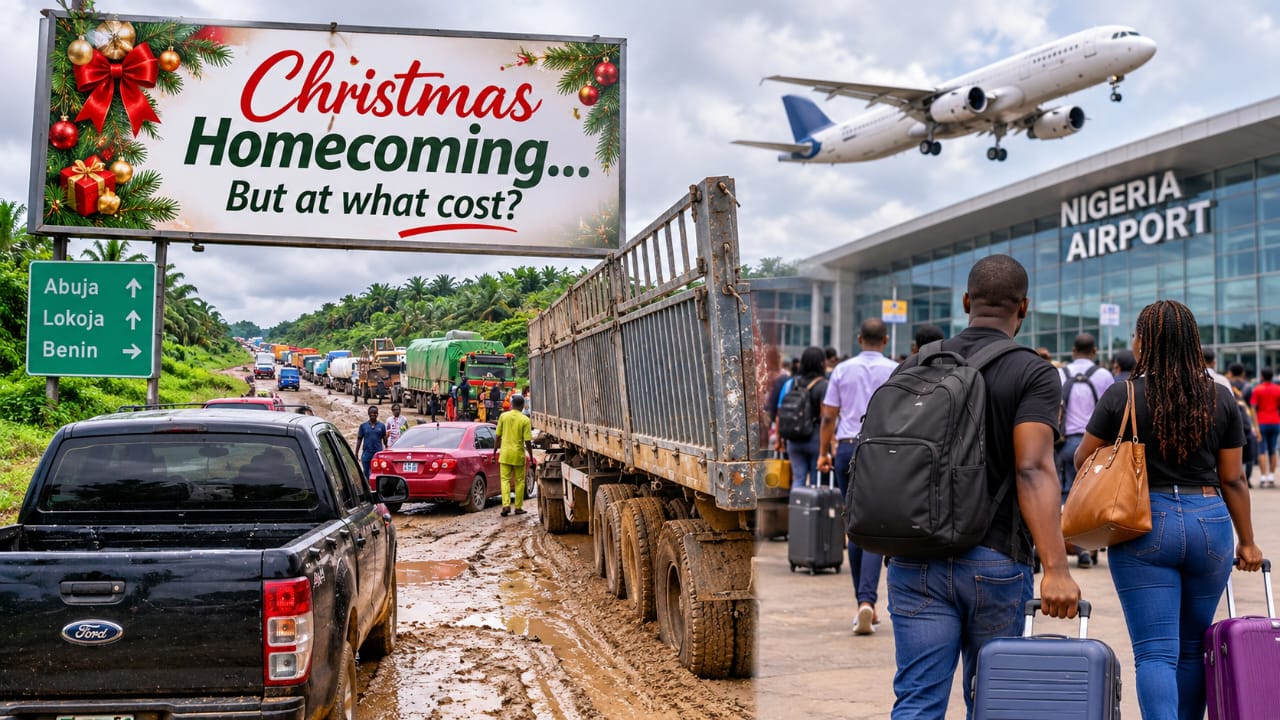
Christmas Homecoming or Journey of Fear? Nigerians Count the Cost

Published

on

By Edisemi Andrew

For millions of Nigerians, Christmas is more than a religious celebration. It is a season of homecoming, family reunions, community connections and shared memories. Across the country, people begin planning journeys to their hometowns, hoping to spend the festive period with loved ones.

But as Christmas approaches, an increasingly difficult question confronts prospective travellers: can they afford to go home, and can they make the journey safely?

For some, the concern is the condition of the roads. For others, it is the fear of kidnapping and violent attacks along major travel corridors. Those who consider flying as an alternative are confronted with another challenge: domestic airfares that are becoming increasingly expensive.

The result is a difficult situation in which the simple desire to reunite with family can become a major financial and security decision.


Between Bad Roads and the Fear of Kidnapping

Road transport remains one of the most accessible means of travelling across Nigeria. However, poor road conditions, prolonged construction work, traffic congestion and persistent security concerns have made some journeys increasingly stressful.

The Abuja-Kaduna highway, for instance, has continued to attract security concerns following reports of renewed kidnappings. In May 2026, Premium Times reported the abduction and eventual death of former House of Representatives member Abba Anas, who was kidnapped while travelling along the route.

More recently, reports emerged of the abduction and killing of Ibrahim Kadafa, an Abuja-based worker and farmer, following an incident around Alheri Camp, near the Kaduna-Abuja corridor. His family reportedly paid ₦56 million in ransom before receiving his body.

These incidents underline the anxiety surrounding some of the country’s major travel routes. They do not mean that every highway is unsafe, but they demonstrate why travellers continue to demand stronger security arrangements.

The United Kingdom’s Foreign, Commonwealth and Development Office, in its November 10 travel advisory, also warned of kidnapping and violent attacks in several parts of Nigeria, including risks associated with road travel. Although the advisory is not a declaration that every route is dangerous, it reinforces the need for travellers to consider the security conditions of their intended destinations and routes.

For families travelling with children, elderly relatives and other vulnerable passengers, uncertainty about road safety can be enough to reconsider a journey altogether.


Road Works Deserve Recognition, But More Is Needed

The Federal Government’s ongoing road interventions deserve acknowledgement.

On November 13, Minister of Works David Umahi directed federal controllers and contractors to intensify emergency rehabilitation of major highways under a three-week nationwide intervention ahead of the festive season.

The roads listed for attention include the Abuja-Lokoja, Mararaba-Keffi, Kano-Katsina, Benin-Warri and Benin-Asaba highways, among others.

The directive is an important recognition of the need to improve road conditions before the expected increase in festive-season traffic.

However, the minister also stated that there had been no reported kidnapping on the Abuja-Kaduna road in the preceding two years. That claim should be considered alongside reports of renewed security incidents in the wider corridor, including those documented by the media in May and November 2026. The differing accounts make it particularly important for security agencies to provide clear, current information to road users.

Where improvements have been delivered, the government, engineers and construction workers deserve commendation. Nigerians should recognise genuine progress, especially where previously difficult routes have become more accessible.

However, emergency repairs should not be mistaken for a lasting solution to years of infrastructure challenges.

Patching potholes ahead of the festive rush is useful, but Nigerians also need durable road construction, proper drainage, regular maintenance and transparent monitoring of public projects.

The question is not simply whether some roads are receiving attention. It is whether the country is doing enough to ensure that safe and functional roads are available throughout the year, rather than mainly when public pressure or seasonal travel demands become difficult to ignore.


When Flying Home Becomes a Luxury

For travellers unwilling to undertake long road journeys, air transport may appear to be a more convenient alternative. Yet the cost of flying during the festive season is becoming another source of anxiety.

Reports published by The Guardian and Punch on November 5 highlighted significant increases in domestic airfares on selected routes ahead of Christmas.

A survey of airline booking platforms indicated that one-way economy tickets on some routes connecting Lagos and Abuja to South-East and South-South destinations had risen to between ₦196,000 and ₦337,500 for December 20 and 21 departures.

For instance, a Lagos-Asaba economy ticket on Air Peace was listed at ₦337,500 for December 21, while an Abuja-Enugu ticket was listed at ₦335,500.

At ₦337,500 per ticket, a family of four would spend approximately ₦1.35 million on a one-way journey alone, excluding airport transfers, luggage and other travel expenses.

Of course, seasonal demand, operating expenses and limited seat availability may contribute to higher fares. The reported prices also represent selected flights and dates, not a uniform charge across the entire domestic aviation industry.

Nevertheless, the figures illustrate how difficult it can be for ordinary families to choose air travel, even when road journeys raise serious safety concerns.

For many Nigerians, the choice is becoming increasingly difficult: undertake a potentially stressful and uncertain road journey or pay an amount that could consume a substantial part of the household budget.


Is Citizens’ Welfare Getting the Attention It Deserves?

Governments routinely make promises about infrastructure, security and improved living conditions. But beyond political speeches and project announcements, citizens need to see consistent results.

The government deserves credit where it delivers meaningful improvements. At the same time, citizens have every right to question why basic infrastructure and adequate security remain major concerns on important travel routes.

Is the priority genuinely the safety and welfare of Nigerians, or does public attention become most important when elections and political interests are at stake?

This is not an assertion about the government’s motives. It is a question of accountability.

Road infrastructure should not be treated as a seasonal project, and the protection of travellers should not depend on public pressure.

The Federal Road Safety Corps (FRSC) reported 7,156 road traffic crashes, 3,445 deaths and 22,292 injuries between January and September 2026.

These figures, released by the Corps and reported by the Voice of Nigeria, are a sobering reminder of the human cost of road accidents. They also reinforce the need for stronger road safety enforcement, vehicle inspections, responsible driving and timely highway maintenance.

The responsibility for safer roads cannot rest on government infrastructure projects alone. Transport operators, commercial drivers, private motorists and passengers all have roles to play in reducing avoidable accidents.

However, citizens should not have to compensate for inadequate infrastructure and weak safety arrangements through extraordinary personal sacrifices.


Christmas Should Be About Coming Home

For Nigerians, travelling home should be an opportunity to celebrate, not an exercise in calculating the risks of the journey or struggling to afford a ticket.

As the festive season approaches, the responsibility is shared. Government must sustain road rehabilitation, improve security along highways and strengthen safety enforcement. Transport operators must also prioritise passenger safety, vehicle maintenance and responsible service delivery.

Travellers, on their part, should plan their journeys carefully, use reputable transport providers, avoid unnecessary night travel where security conditions are uncertain and pay attention to official safety information.

Nigerians deserve to enjoy the season without having to choose between their financial security and physical safety.

Government should be commended for every road successfully rehabilitated. But citizens deserve more than temporary interventions and promises. They deserve dependable infrastructure, effective security and transport options they can reasonably afford.

Christmas is a season of reunion, love and belonging. It should not become a period when families are forced to abandon the journey home because the cost is too high or the risks are too frightening.

What is the value of winning an election if the people a government seeks to serve cannot travel safely, affordably and confidently to celebrate with the people they love?

Continue Reading

Opinion

A Nation on its Knees: Remembering Our Fallen Heroes

Published

on

By Akeem Omobolanle Covenant

Nigeria is once again confronted with a painful moment of national grief following the tragic crash of a Nigerian Air Force aircraft in Igbokoda, Ilaje Local Government Area of Ondo State, on Monday, October 5, 2026.

The aircraft, an ATR-42 with tail number NGR 931, was on a routine mission from Benin City to Lagos when communication with air traffic controllers was lost at about 9:13 a.m. The wreckage was later located near the Naval Base in Igbokoda. Preliminary information from the Federal Ministry of Aviation indicated that 25 passengers and seven crew members were on board.

The tragedy has left the Nigerian Armed Forces and the entire nation mourning. President Bola Ahmed Tinubu has declared three days of national mourning, with national flags to be flown at half-mast in honour of the fallen personnel. A thorough investigation has also been ordered to determine the cause of the crash and prevent a recurrence.

A Painful Loss to the Nigerian Military

This is more than an aircraft accident. It is a significant loss to the Nigerian military and to the families whose loved ones served the nation.

Our military personnel make tremendous sacrifices every day. They leave their homes, families and loved ones to protect the territorial integrity, peace and security of Nigeria. The loss of these men and women is therefore a loss to the entire nation.

Beyond the immediate human tragedy, such an incident can affect the morale of the Armed Forces, operational capacity, institutional confidence and the families of serving personnel. The ATR-42 aircraft involved was configured for maritime patrol and intelligence, surveillance and reconnaissance duties, making its loss significant to Nigeria’s security operations as well.

Our hearts therefore go out to the Nigerian Air Force, the Armed Forces of Nigeria, the families and loved ones of the deceased, and every Nigerian affected by this tragedy.

May we never take the sacrifices of our military personnel for granted.

What Government Must Do

While the cause of the crash remains subject to investigation, this tragedy should compel government and the military authorities to take every necessary step to strengthen aviation safety.

Government should:

1. Conduct a transparent and thorough investigation into the accident and make appropriate findings public.

2. Carry out comprehensive safety and technical inspections of military aircraft, particularly aircraft that have been in service for extended periods.

3. Strengthen preventive maintenance and aircraft servicing, ensuring that maintenance schedules are strictly followed and adequately funded.

4. Invest continuously in modern aviation technology, including flight-monitoring systems, communication equipment, navigation systems and emergency-location technology.

5. Strengthen the training and welfare of military aviation personnel, including pilots, engineers, technicians and other crew members.

6. Improve emergency search-and-rescue capabilities so that when an aviation accident occurs, response teams can reach the location as quickly as possible.

7. Learn from every aviation incident. Investigations should not merely establish what went wrong; they should produce practical reforms that prevent another tragedy.

The lives lost cannot be brought back, but lessons from this tragedy can help save lives in the future.

Prayer for our dear country Nigeria

At this difficult moment, we must not allow fear, sorrow or uncertainty to overcome our hope.

We pray that Almighty God will comfort every bereaved family, strengthen the Nigerian Air Force and grant wisdom to all those responsible for the investigation and protection of our nation.

The Bible says:

“No weapon that is formed against thee shall prosper.” Isaiah 54:17

We pray that every evil plan against Nigeria shall be frustrated, and that God will expose and destroy every scheme of the enemy against the peace, security and progress of our nation.

As Scripture declares:

“The LORD is faithful, who shall stablish you, and keep you from evil.” 2 Thessalonians 3:3

May God preserve our soldiers, airmen and airwomen, policemen and women, and all those who put their lives on the line for Nigeria.

May He protect our skies, our land and our waters.

May He strengthen the families who have lost their loved ones and grant them the grace to endure this painful season.

May the Lord heal Nigeria, protect our nation from further tragedy, and give our leaders wisdom to make decisions that preserve the lives of those entrusted with our national security.

To every Nigerian, this is a time to mourn, but it is also a time to pray, unite and remain resilient.

Let us reject unnecessary speculation, misinformation and fear. Let us respect the families of the fallen and allow the relevant authorities to conduct their investigations.

Let us continue to pray for our nation.

May the souls of all those who lost their lives in this tragic incident rest in perfect peace.

May God comfort their families.

May God strengthen the Nigerian Military.

May God protect Nigeria from evil and preserve our nation.

May peace reign in Nigeria.

And may God continue to bless and protect the Federal Republic of Nigeria.

Amen.

Continue Reading

Trending

extrabetseo ajansıseo ajansısweet bonanzatrlisans pinterestgiftcardmall/mygiftgrandpashabet girişgrandpashabet güncel girişgrandpashabetgrandpashabet girişgrandpashabettaraftarium24dizipalgiftcardmall/mygiftjustin tvGrandpashabetGrandpashabetGrandpashabetGrandpashabetRadissonbetsweet bonanzasweet bonanzapadişahbettaraftarium24taraftarium24rojadirectajustin tvcasinolevantgrandpashabetgrandpashabetgrandpashabetgrandpashabetgrandpashabetgrandpashabetgrandpashabetholiganbetholiganbetholiganbetmarsbahismarsbahisjojobetjojobetjojobetcasibomcasibomcasibomholiganbetholiganbetjojobetjojobet sssjojobet güvenlikjojobet güvenlikjojobetholiganbetholiganbetjojobetcasinolevantimajbetsekabetjojobetjojobet girişgrandpashabetgrandpashabetTürkiyenin Casino Sitelerivdcasinograndpashabetgrandpashabet girişGrandpashabetsahabetjojobet erişimgrandpashabetjojobetmatbetnesinecasino xwbahis xbetgaranti xgrandpashabet girişDeneme Bonusujojobetjojobetjojobet