Connect with us

Health

Antimicrobial Resistance More Deadly In Children Than HIV, TB, Malaria, Says WHO

Published

on

As Nigeria joins the global community to commemorate the World Antimicrobial Awareness Week (WAAW), the World Health Organisation (WHO) has said antimicrobial resistance (AMR) contributes more to child mortality than HIV, TB or Malaria in Nigeria.

The World Health Organization representative and head of mission in Nigeria, Dr Walter Kazadi who stated this yesterday in Abuja, also said the GDP loss attributable to AMR in developing countries like Nigeria had been forecast to be at 5-7 percent.

He said; “In Nigeria alone, in 2019, there were 64,500 deaths attributable and 263,400 deaths associated with AMR from pathogens such as S. pneumoniae, K. pneumoniae, E.coli, Staph aureus, etc. AMR remained at the top of list as biggest contributor in overall and child mortality in Nigeria than HIV, TB or Malaria.”

Kazadi stressed the need for urgent action towards the main causes of AMR, which he said include; “Misuse and abuse of antimicrobial medicines, lack of access to clean water, sanitation and hygiene; poor infection prevention and control practices; inadequate use of vaccines to decrease infections; inadequate laboratory capacity including equipment and reagents to guide proper treatment; poor waste disposal practices; and the presence of antimicrobials in food-animal production and crop protection as well as the environment and water bodies.”

He assured the WHO’s commitment to support accelerated efforts required to achieve the six strategic objectives of National Action Plan -2.0 to minimize the impact of AMR with Ministries, Departments and Agencies and all AMR stakeholders in line with RD/AFRO-call for action based on AMR regional strategy.

Continue Reading
Click to comment

Leave a Reply

Your email address will not be published. Required fields are marked *

Crime

NAFDAC Intercepts Skin-Lightening Injections in Kano Airport Shipment

Published

on

By Queensly Felix


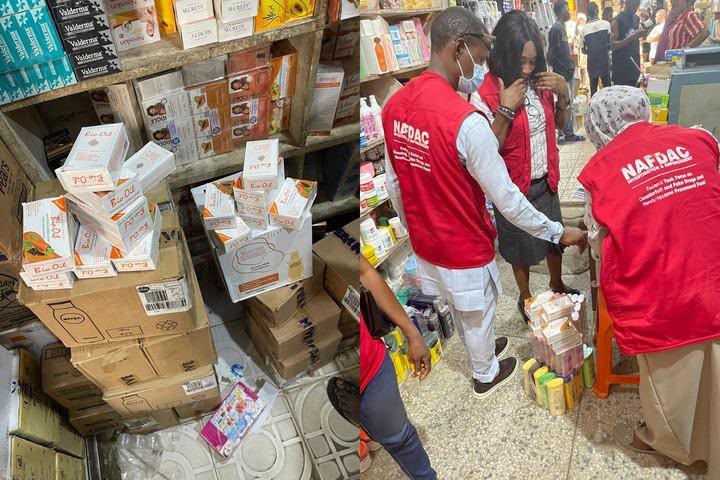
The National Agency for Food and Drug Administration and Control (NAFDAC) has intercepted 17 cartons of suspected unregistered beverages, skin-lightening injections and anti-ageing injections at the Mallam Aminu Kano International Airport in Kano State.

The products were concealed in a 33-carton consignment declared as “personal effects” and transported aboard an Ethiopian Airlines flight that arrived at the airport on Wednesday, November 18.

NAFDAC disclosed the interception on Thursday, November 19, following a joint inspection by its Port Inspection Directorate and other officials at the Skyway Aviation Handling Company (SAHCO) cargo shed.

According to the agency, a physical examination revealed that the products had no NAFDAC registration numbers, while the consignment lacked the required import documentation.

The entire shipment was subsequently placed on hold in the custody of the Nigeria Customs Service, while the importer was invited for questioning and a statement obtained as part of an ongoing investigation.

NAFDAC said the products would remain on hold pending further regulatory directives. It also cautioned that their quality and authenticity had not yet been established.


Why the Discovery Raises Concern

The interception has drawn attention to the risks associated with purchasing and using regulated products whose registration and quality have not been verified.

Skin-lightening and anti-ageing injections are particularly important to scrutinise because they are introduced directly into the body. Their safety cannot be determined from packaging, marketing claims or promises of quick results.

However, NAFDAC has not confirmed that the products intercepted in Kano were counterfeit, substandard or harmful. Their status remains subject to regulatory investigation.

The discovery also highlights the need for consumers to exercise caution when purchasing beauty products, particularly injectable treatments advertised online or sold through informal channels.


How Nigerians Can Check Products

NAFDAC provides online platforms through which consumers can check the registration status of regulated products.


Before purchasing a product, consumers should:

– Check for the NAFDAC registration number and confirm that it corresponds with the product.

– Examine the manufacturer’s name and address, batch number, manufacturing date and expiry date.

– Check that the packaging and seals are intact and show no signs of tampering.

– Avoid products with missing labels, unclear ingredients or unsupported claims.

– Seek advice from qualified healthcare professionals before undergoing injectable cosmetic procedures.


Consumers can use NAFDAC’s “product verification portal” (https://registration.nafdac.gov.ng/) and its “Greenbook registered-product database” (https://greenbook.nafdac.gov.ng/) to check available registration information.

A registration number printed on a package should not automatically be taken as proof of authenticity; the details should match the actual product.


NAFDAC says it is strengthening surveillance and enforcement at Nigeria’s entry points to prevent the unlawful importation and circulation of unregistered, substandard and falsified regulated products.

The Kano interception demonstrates the importance of these checks, particularly where regulated products are concealed in consignments declared under different descriptions.

For consumers, the lesson is straightforward: beauty and anti-ageing claims should not take priority over safety and proper regulatory checks.

As the investigation continues, Nigerians will be watching to see what further action NAFDAC takes and whether the agency establishes the identity, origin and quality of the intercepted products.

Continue Reading

Abuja Reports

Residents Query PCN Over Pharmacy at Abuja NNPC Station

Published

on

By Patrick Idowu

Residents of Life Camp, Abuja, are raising safety alarms over the Pharmacy Council of Nigeria’s (PCN), approval of an H-Medix outlet situated within an NNPC Limited filling station.

Locals argue that selling medication in close proximity to fuel pumps exposes pharmaceutical products to toxic fumes and fire hazards.

Resident Cyril Chizoba warned of “serious health risks,” including chemical contamination, while medical expert Dr. Gaius Mikinta noted that volatile environments can compromise the efficacy of temperature-sensitive drugs.

In response, PCN Legal Head Abana Lawan confirmed the outlet is duly licensed.

He stated that approval was granted after a “demarcation” within the premises met regulatory standards, adding that the move helps prevent monopolies and expands service access.

However, PCN Registrar Pharm. Ibrahim Babashehu Ahmed declined to comment further during a recent press visit.

Despite official assurances, the community is calling for an independent inspection. “I was surprised regulators approved this,” said Solomon Dauda, a local driver, noting the daily dispensing of petrol and gas at the site.

Residents continue to demand greater transparency to ensure pharmaceutical standards aren’t being traded for convenience.

Continue Reading

Abuja Reports

FCT Nurses Condemn Attacks on Colleagues

Published

on

By Patrick Idowu

The National Association of Nigeria Nurses and Midwives (NANNM), FCT chapter, has condemned the attack on a nurse at Wuse General Hospital by suspected “one-chance” criminals.

The nurse, who stayed after her shift to assist a colleague in the ICU, was allegedly beaten and left seriously wounded. She is receiving treatment.

The union said attacks on healthcare workers in the FCT are becoming frequent, with nurses now living in fear during early mornings and late evenings. It urged the Minister of the FCT, Nyesom Wike, and security agencies to strengthen patrols around hospitals and vulnerable bus stops.

“No healthcare worker should risk their life simply for serving humanity,” the statement said. “Bus stops around hospitals have become death traps. We demand immediate and sustained action to protect all nurses.”

The attack follows earlier incidents, including the killing of nurses Chinemerem Pascalina Chuwumeziem and Princess Ochigbo in January, allegedly by one-chance gangs.

Analysts link the crimes to gaps in organised public transport, forcing reliance on unregistered taxis and private vehicles during off-peak hours.

The association had previously called on authorities to improve hospital security and provide safe transport for healthcare workers.

Continue Reading

Trending

taraftarium24seo ajansıseo ajansıbetwoonyasal deneme bonusu veren sitelerddeneme bonusjustin tvtrlisans pinterestgiftcardmall/mygiftdinamobetgrandpashabet girişgrandpashabetdinamobetGrandpashabettaraftarium24dizipalgiftcardmall/mygiftjustin tvGrandpashabetGrandpashabetGrandpashabetDeneme Bonusu Veren SitelerCasibomgrandpashabettaraftarium24taraftarium24rojadirectajustin tvjojobetjojobetcasibom güncel girişcasibom xcasibom girişcasibomcasibomcasibompalacebetteosbetgameofbetbetgitholiganbetcasibommarsbahisgrandpashabetJojobet GirişJojobetJojobetnatobetbetgitromabetgameofbetjojobetjojobetradissonbetpalacebetpalacebetcratosroyalbetgrandpashabetbetgarantitambetmatbetimajbetpusulabet girişvdcasinoholiganbetsahabetcasibomsahabet girişvdcasino girişmarsbahis girişjojobetcasibomgrandpashabetbetbeytambetesbetjojobetgrandpashabet