Connect with us

Politics

Don’t Go To War With Niger – Bauchi Sheikh Urges Tinubu

Published

on

A renown Islamic cleric Sheikh Bauchi said this in Bauchi while interacting with journalists also appealed to President Tinubu and ECOWAS heads of states to explore other options towards resolving the lingering crisis rocking Niger rather than the option of war. The deadline given by the Economic Community of West African States, ECOWAS, to the military junta in Niger Republic expired yesterday .

The popular cleric, who is the leader of the Tijjaniya sect in Nigeria, also urged the National Assembly not to approve the request made by the President for any form of war with Niger Republic.

According to the elderly scholar, instead of engaging in war with the Francophone West African country, President Tinubu and other ECOWAS leaders should rather engage in dialogue with the Nigerien military junta that ousted President Mohammed Bazoum going forward

He added that both Nigeria and Niger Republic have a longtime cordial relationship that needed to be strengthened instead of weakening it.

Nigerians and Niger are united. Hence there is the need for the Federal Government to engage in diplomatic approaches with a view to strengthening the cordial relationship for the economic growth and development of the two West African countries,” the centenarian said.

According to him, if Nigeria should embark on war with Niger, many would not only suffer the consequences but innocent souls would also be killed, admonishing that, “it is good to find an amicable resolution to avoid shedding blood of innocent souls.

He then urged other West African leaders and other critical stakeholders to embrace diplomatic dialogue.

“We are appealing to President Tinubu; we are also appealing to the National Assembly ,all ECOWAS leaders and stakeholders not to engage Niger in war.

“This is to save the lives of innocent souls and to save people from incurring more hardship,” Sheikh Bauchi appealed.

2027 General Elections

Atiku’s 2027 Ambition Faces Test Beyond Tinubu’s Incumbency

Published

on

By Patrick Idowu


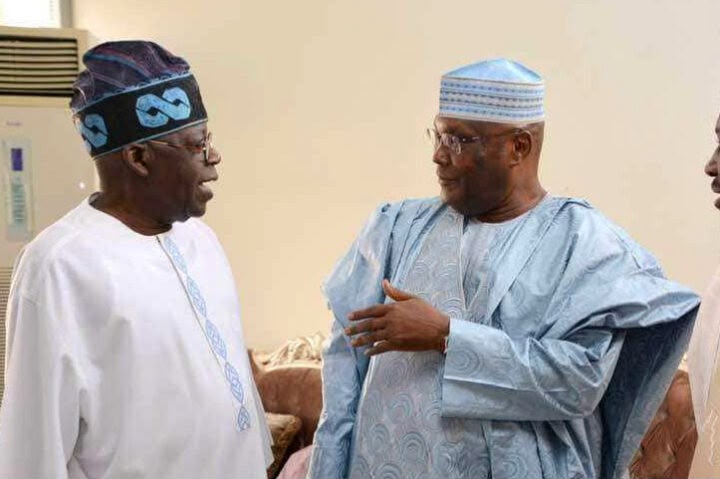
Former Vice-President Atiku Abubakar’s renewed efforts to build an opposition alliance ahead of the 2027 presidential election have brought fresh attention to the challenge facing President Bola Tinubu’s re-election bid, but the former vice-president must overcome significant political, legal and organisational hurdles before mounting a united challenge.

Atiku’s political engagements come amid growing opposition consultations aimed at presenting a stronger alternative to the ruling All Progressives Congress (APC). However, whether those efforts can produce a credible electoral coalition remains uncertain.

The November 5 Federal High Court judgment affecting the leadership of the African Democratic Congress (ADC), the platform on which Atiku emerged as its presidential candidate, has introduced another complication.

The court invalidated decisions taken by the David Mark-led leadership, including actions connected to the party’s candidate nominations. The ADC has challenged the ruling at the Court of Appeal and is seeking to prevent the Independent National Electoral Commission (INEC) from altering its leadership records and candidates’ nomination details while the appeal is pending.

The dispute has raised questions about the stability of Atiku’s political platform at a time when opposition parties are attempting to coordinate their preparations for 2027.


The 2023 Electoral Arithmetic

The 2023 presidential election remains an important reference point in assessing the potential strength of an opposition alliance.

According to official INEC results, Tinubu secured 8,794,726 votes, Atiku polled 6,984,520, while Labour Party candidate Peter Obi received 6,101,533 votes.

Combined, Atiku and Obi received approximately 13.1 million votes, about 4.3 million more than Tinubu’s total.

The figures suggest that cooperation between major opposition political forces could have considerable electoral significance. However, the arithmetic does not automatically translate into a winning coalition.

The candidates drew support from different regional, political and demographic constituencies, and there is no guarantee that their supporters would transfer their votes to a common candidate in a future election.

The challenge, therefore, is not simply bringing opposition leaders together but negotiating a political arrangement capable of retaining their respective support bases.


The Opposition’s Unity Test

Efforts to coordinate opposition parties have gained momentum through the Coalition for Democracy, which is expected to hold another summit in Abuja on November 23.

The six parties involved are the African Democratic Congress (ADC), Peoples Democratic Party (PDP), Nigeria Democratic Congress (NDC), Allied Peoples Movement (APM), Social Democratic Party (SDP) and Peoples Redemption Party (PRP).

The parties are expected to consider and sign agreements on democratic renewal, opposition cooperation and a national reform programme.

However, the proposed agreements do not yet establish that the parties have settled the more difficult question of presenting a single presidential candidate.

Atiku, Obi, Oyo State Governor Seyi Makinde and other political figures have their own ambitions, political constituencies and calculations. Reconciling these interests will require more than public declarations of unity.

The question of who leads the opposition ticket, which party provides the platform and how political influence is shared could determine whether the coalition progresses beyond consultations.


Tinubu’s Incumbency and the Economic Question

For Tinubu, the election will provide an opportunity to seek a second term and defend his administration’s record.

His political experience, the APC’s nationwide structures, alliances with influential political figures and the advantages associated with incumbency remain important factors in the contest.

However, the administration’s economic policies will also remain central to public assessment of its performance.

The removal of petrol subsidies, exchange-rate reforms and other economic measures have generated significant debate, particularly over their effects on household expenses, transportation, food prices and business operations.

The opposition is likely to make economic conditions and insecurity major issues in its campaign, while the administration will have to present its record and explain the outcomes of its policies to voters.

Ultimately, the extent to which these issues influence voting decisions will depend on developments before the election and how Nigerians assess the competing arguments.


Atiku’s Political Challenge

Atiku brings considerable political experience, having served as Vice-President from 1999 to 2007 and contested several presidential elections.

But his experience alone does not resolve the challenges confronting his latest ambition.

He must navigate the legal uncertainty surrounding the ADC, maintain his political support base, engage other opposition leaders and convince voters that his proposed alternative addresses their concerns.

His previous presidential defeats may also feature in public debates about political renewal, leadership and the emergence of new political choices.

For the opposition, the task extends beyond mobilising dissatisfaction with the incumbent administration. It must demonstrate that it can offer a coherent programme, maintain internal discipline and protect its electoral interests.


The Battle Beyond Atiku and Tinubu

The 2027 presidential contest is unlikely to be determined solely by the political rivalry between Atiku and Tinubu.

It will also test the ability of opposition parties to manage competing ambitions, resolve internal disputes and build a credible alternative capable of attracting voters across different regions.

The November 23 opposition summit will offer another opportunity to demonstrate whether political cooperation can move from discussions to practical commitments.

For Tinubu, the challenge will be defending his administration’s record and retaining public confidence. For Atiku and other opposition figures, it will be demonstrating that their political differences can be reconciled into an effective electoral strategy.

The decisive contest, therefore, is not only over who occupies the presidential ticket, but also over party stability, voter confidence, coalition-building and the ability to translate political support into votes.

Continue Reading

2027 General Elections

ADC Asks INEC to Postpone November 28 Mock Election Exercise

Published

on

By Edisemi Andrew

The African Democratic Congress (ADC) Presidential Campaign Council has asked the Independent National Electoral Commission (INEC) to postpone its nationwide mock accreditation and results collation exercise scheduled for November 28, 2026, citing insufficient preparation time for political parties.

The council also raised concerns about the electronic transmission and publication of election results at different collation levels, warning that limited public access to results could undermine transparency ahead of the 2027 general elections.

The demand was made in a statement issued in Abuja on Wednesday, November 18, by the council’s Director of Media and Publicity, Kola Ologbondiyan.

The ADC-PCC alleged that INEC gave political parties inadequate notice to nominate, mobilise and train their agents for the nationwide exercise.

According to the council, the commission’s invitation letter, dated November 16, gave parties until November 18 to submit the names of their participating agents, leaving them with barely two days to meet the deadline.

The exercise is expected to cover all 774 local government areas and two polling units in each of the country’s 8,838 Registration Areas, a scale the council said would require sufficient time for effective preparation and participation.

Describing the arrangement as hasty and unfair, the ADC-PCC urged INEC to reschedule the exercise to enable political parties to deploy representatives who could properly observe and assess the process.

The commission had announced the November 28 exercise through its chairman, Professor Joash Amupitan, during a high-level dialogue at Chatham House in London on November 12.

Amupitan said the exercise would test the commission’s upgraded Bimodal Voter Accreditation System (BVAS), accreditation procedures and electronic transmission of election results ahead of the 2027 polls.

He acknowledged that controversies surrounding the 2023 general elections had significantly damaged public confidence in INEC, adding that the commission had introduced additional technical safeguards to address identified weaknesses.

Among the measures announced were the procurement of additional BVAS devices and a reduction in the maximum number of registered voters assigned to each device from 1,250 to 850. Polling units with more than 850 registered voters are expected to receive additional devices.

The commission is also constructing climate-controlled storage facilities across the states to address equipment malfunctions previously associated with extreme heat and storage conditions.

Beyond the proposed postponement, the ADC-PCC criticised what it described as INEC’s position that results from Ward, Local Government and State collation levels would not be electronically transmitted and published on its Result Viewing Portal (IReV) during the 2027 elections.

The council’s concern followed reported comments by INEC’s Director of Information and Communication Technology, Lawrence Bayode, that the commission had neither developed nor tested the necessary system for uploading results from those collation levels.

The ADC-PCC argued that limiting electronic publication to polling-unit results could reduce transparency and create opportunities for manipulation during subsequent stages of collation.

It specifically questioned the reported position regarding Forms EC8B, EC8C and EC8D, which relate to Ward, Local Government and State collation results respectively.

However, the campaign council’s interpretation of the reported comments should be distinguished from a definitive statement of INEC’s final policy or the legal requirements governing electronic transmission and publication of election results.

The disagreement comes as INEC intensifies preparations for the 2027 general elections, with the commission under pressure to demonstrate that its upgraded technology and operational safeguards can address public concerns arising from previous elections.

While political parties have a legitimate interest in observing electoral preparations, INEC is also expected to ensure that its testing exercises are conducted within a workable operational framework.

The ADC-PCC has urged the commission to demonstrate impartiality, competence and independence, insisting that meaningful stakeholder participation is necessary to build confidence in the electoral process.

With the November 28 exercise approaching, attention is now on INEC’s response to the postponement request and the concerns raised over electronic transmission and public access to results.

The credibility of the 2027 elections will depend not only on the technology deployed but also on the transparency of the procedures through which votes are accredited, recorded, collated and declared.

Continue Reading

2027 General Elections

Coalition Gives 2027 Candidates 48 Hours to Condemn Violence

Published

on

By Edisemi Andrew

The Coalition Against Electoral Violence in Nigeria (CAEVN) has given presidential candidates of major political parties 48 hours to publicly caution their supporters against political violence, following reports of attacks, intimidation and confrontations at political gatherings ahead of the 2027 general elections.

The coalition issued the ultimatum at a press conference in Abuja on Tuesday, November 17, warning that the reported incidents could undermine public safety and threaten the credibility of the country’s democratic process.

Speaking on behalf of the group, Dr Opialu Fabian Opialu expressed concern that Nigeria was returning to patterns of election-related violence witnessed during previous electoral cycles.

“Nigeria is sliding back into the familiar pattern of election-season bloodshed, and the warning signs can no longer be ignored,” he said.

CAEVN cited several reported incidents involving attacks on political gatherings, campaign convoys and supporters of rival parties across different parts of the country.

Among the incidents highlighted was an alleged attack on a Nigeria Democratic Congress (NDC) town hall meeting in Oregun, Lagos, where the coalition said cutlasses, cudgels and stones were used during a confrontation, leaving some participants injured and vehicles damaged.

The group also raised concerns over reported confrontations associated with political activities in Asaba, Calabar, Enugu, Ebonyi, Warri and Benue. It further mentioned reported attacks on convoys, disruptions of political meetings and the use of dangerous weapons in Delta, Cross River, Ekiti, Kebbi and Oyo states.

The coalition accused the NDC and its vice-presidential candidate, Rabiu Musa Kwankwaso, of allowing aggressive political mobilisation to contribute to rising tensions, urging the party’s leadership to rein in its supporters.

However, it said the ruling All Progressives Congress (APC) should also be held accountable for allegations involving its supporters.

“We do not exonerate the All Progressives Congress. There have been credible reports of APC-linked thugs attacking opposition processions,” the coalition said, alleging that some opposition activities had been disrupted and campaign materials destroyed.

CAEVN also condemned reported clashes between rival factions of the Peoples Democratic Party (PDP) in Gombe State over candidates and control of party structures, maintaining that political violence should not be excused on the basis of party affiliation.

Beyond its appeal to presidential candidates, the coalition called on the Inspector-General of Police and commissioners of police across the states to investigate reported incidents, identify alleged sponsors and prosecute anyone found culpable, irrespective of political affiliation.

It also urged the Independent National Electoral Commission (INEC) and relevant security agencies to treat verified cases of electoral violence as national security concerns rather than ordinary disagreements between political supporters.

Traditional rulers, religious leaders and community elders were also urged to discourage the recruitment of young people as political enforcers.

“Traditional rulers, religious leaders and community elders must stop looking the other way. Your sons are the ones being used as foot soldiers. Speak up now,” the coalition appealed.

The 48-hour ultimatum specifically addressed presidential candidates of the APC, African Democratic Congress (ADC), NDC, PDP and African Action Congress (AAC), asking them to publicly instruct their supporters to abandon thuggery, intimidation and other forms of political violence.

The demand comes amid growing public attention to reported confrontations involving political supporters as preparations for the 2027 general elections gather momentum.

The coalition maintained that political parties and their candidates must demonstrate their commitment to peaceful elections by taking responsibility for the conduct of their supporters.

Continue Reading

Trending

taraftarium24seo ajansıseo ajansıbetwooncasibomddeneme bonusjustin tvtrlisans pinterestgiftcardmall/mygiftdinamobetgrandpashabet girişgrandpashabetdinamobetGrandpashabettaraftarium24dizipalgiftcardmall/mygiftjustin tvGrandpashabetGrandpashabetGrandpashabetDeneme BonusuCasibomkavbettaraftarium24taraftarium24rojadirectajustin tvbetsalvador xteosbetbahiscasino x1win xbetgitjojobetjojobet xjojobet xsonbahis xgrandpashabetgrandpashabetgrandpashabet güncel girişgrandpashabet girişmarsbahis girişholiganbet girişholiganbet güncel girişcasibom girişgrandpashabetgrandpashabetholiganbetholiganbetholiganbetholiganbetjojobetjojobetgrandpashabetsonbahis xsonbahis xgrandpashabetbetbey xesbet xcashwin xmatbetpusulabetsahabetmatbet girişpusulabet girişsahabet girişmatbetholiganbetmarsbahismarsbahis girişibizabet xjojobet xgrandpashabetbetpuan xnesinecasino xwbahis xbetgaranti xgrandpashabetjojobetjojobet